Orthodontic treatment planning changed once anchorage stopped depending on the patient's own dentition. A temporary anchorage device, placed in bone and removed at the end of treatment, gives a fixed point that does not move back. That single change makes molar distalization, intrusion and full space closure predictable in cases that previously needed extraoral appliances or compromise.
The decision a clinician actually faces is narrower than the literature suggests: which screw, at which site, in which diameter, with which transmucosal height. This guide covers that decision, and the instruments needed to execute it.

What a Temporary Anchorage Device Does in Practice
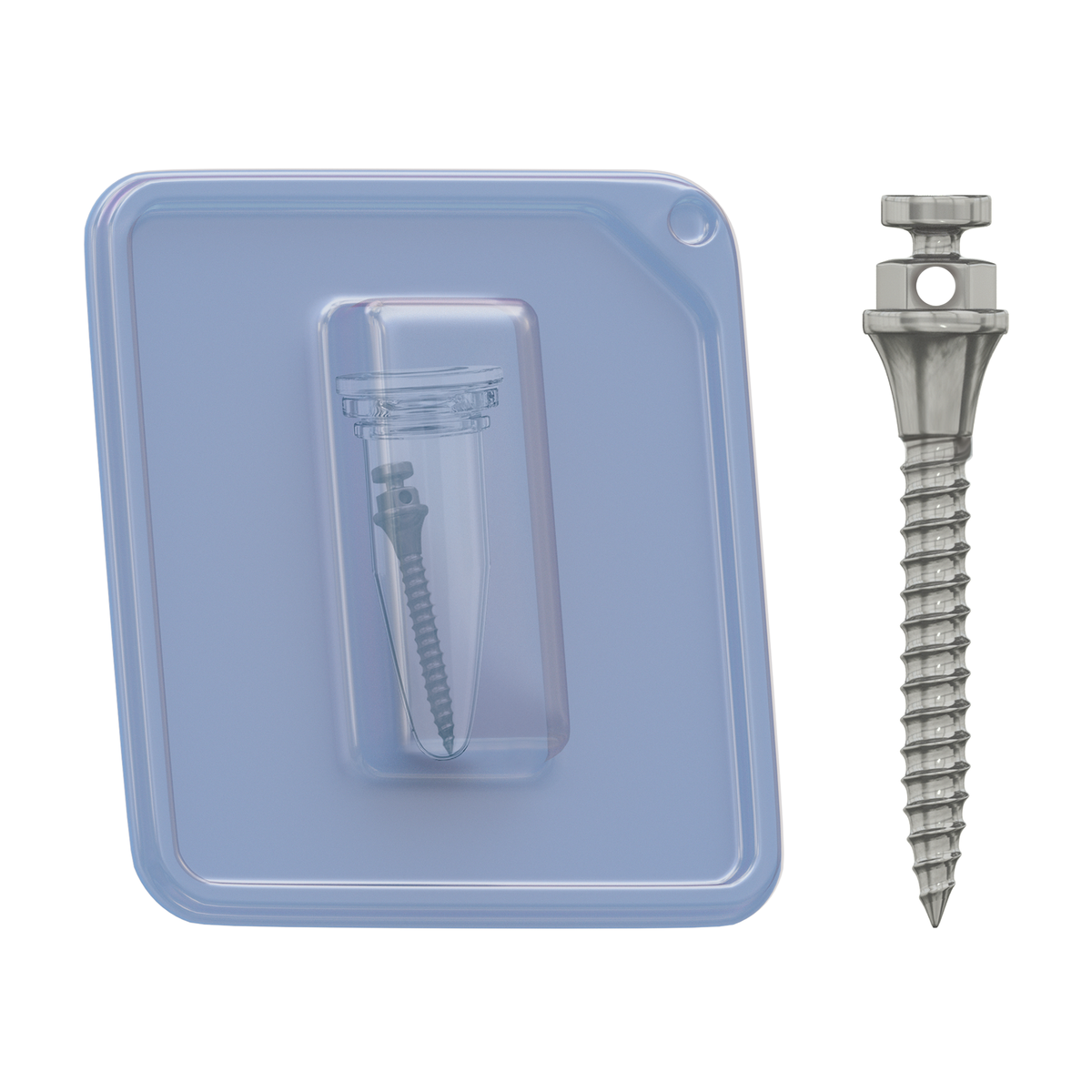
A mini-screw provides skeletal anchorage. Force applied against it produces no reciprocal movement of the anchor unit, because the anchor is bone rather than teeth.
That eliminates the anchorage loss that limits conventional mechanics: no mesial drift of posterior segments during retraction, no extrusion of the anchor molars, and no dependence on patient compliance with elastics or headgear.
The screw is temporary by design. It is placed with a simple surgical protocol, loaded according to the protocol the clinician follows, and removed once the tooth movement is complete.
The Four Mini-Screw Types and Where Each One Goes
Screw selection follows the site, not preference. Four configurations cover the great majority of orthodontic anchorage cases.
Standard Interradicular Screw, 1.5 mm
The workhorse. Placed in attached gingiva between the roots, most often between the second premolar and first molar in the maxilla. The 1.5 mm diameter is chosen because interradicular space is limited and root proximity is the main risk at this site.
Crosshead (Bracket Head) Screw, 1.5 mm
Carries a bracket-style head with slots, so an archwire segment, a coil spring or a ligature can be engaged directly on the screw. It suits direct anchorage mechanics where the force vector runs straight from the screw to the tooth being moved.
Buccal Shelf Screw, 2.0 mm
Placed in the mandibular buccal shelf, lateral and distal to the second molar, for lower molar distalization and full-arch retraction. The site has thicker cortical bone and thicker overlying soft tissue than an interradicular site, which is why this screw is wider at 2.0 mm and carries a 4.0 mm transmucosal collar.

Zygomatic Bone Screw, 2.0 mm
Placed at the infrazygomatic crest for maxillary molar distalization and total arch movement. Soft tissue depth at this site is the greatest of the four, and the 8.0 mm transmucosal collar exists to keep the head clear of mucosa rather than buried in it.
Selection at a Glance
| Screw | Diameter | Transmucosal height | Typical site | Primary indication |
|---|---|---|---|---|
| Standard interradicular | 1.5 mm | Short | Between roots, attached gingiva | Retraction, intrusion, indirect anchorage |
| Crosshead / bracket head | 1.5 mm | 1.0 mm | Between roots, attached gingiva | Direct traction from the screw head |
| Buccal shelf | 2.0 mm | 4.0 mm | Mandibular buccal shelf | Lower molar distalization, arch retraction |
| Zygomatic bone screw | 2.0 mm | 8.0 mm | Infrazygomatic crest | Upper molar distalization, total arch movement |
Choosing Diameter, Thread Length and Transmucosal Height
Three site measurements drive the choice. Take them from the CBCT or periapical film before ordering, not at the chair.
Interradicular Space and Root Proximity
The available space between adjacent roots sets the maximum safe diameter. Where the corridor is narrow, a 1.5 mm screw is chosen specifically to preserve clearance from the periodontal ligament on both sides.
Cortical Bone Thickness
Primary stability in a mini-screw comes from cortical engagement rather than from osseointegration. Sites with thick cortex, such as the buccal shelf and the infrazygomatic crest, tolerate a wider screw and give better initial stability than thin interradicular cortex.
Soft Tissue Thickness and the Transmucosal Collar
The transmucosal height, written as T/M in the product specification, is the smooth collar that passes through mucosa. It should match tissue depth at the site.
A collar that is too short leaves the head sitting against inflamed tissue and complicates hygiene. This is the specification most often selected by habit rather than by measurement, and it is a common reason a screw becomes uncomfortable within weeks of placement.
Space Closure With Skeletal Anchorage
Space closure is where mini-screws changed the mechanics most visibly. There are two ways to use the screw, and they are not interchangeable.
Direct Anchorage
Force runs from the screw directly to the tooth or segment being moved, usually through a coil spring or an elastomeric chain engaged on the screw head. A crosshead screw suits this configuration because the head accepts the attachment without an intermediate component.
Indirect Anchorage
The screw is tied rigidly to a tooth or segment that must not move, and conventional mechanics then work against that stabilized unit. The screw carries no direct force vector; it simply removes the possibility of anchorage loss.
Indirect anchorage is often preferred when the desired force vector would place the screw in an unfavorable position, or when a stable posterior unit is needed for several mechanics in sequence.
Drivers, Kits and What Belongs on the Tray
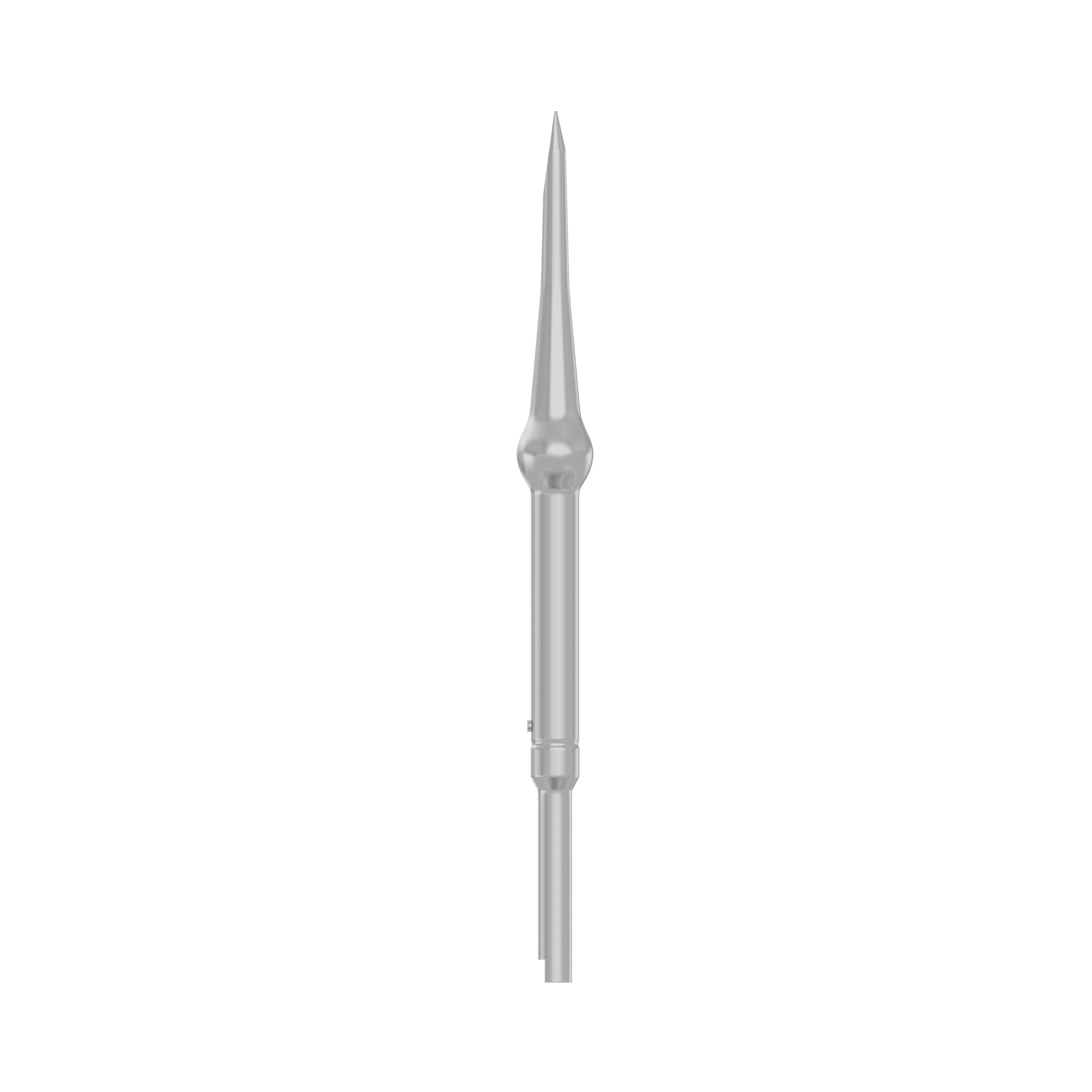
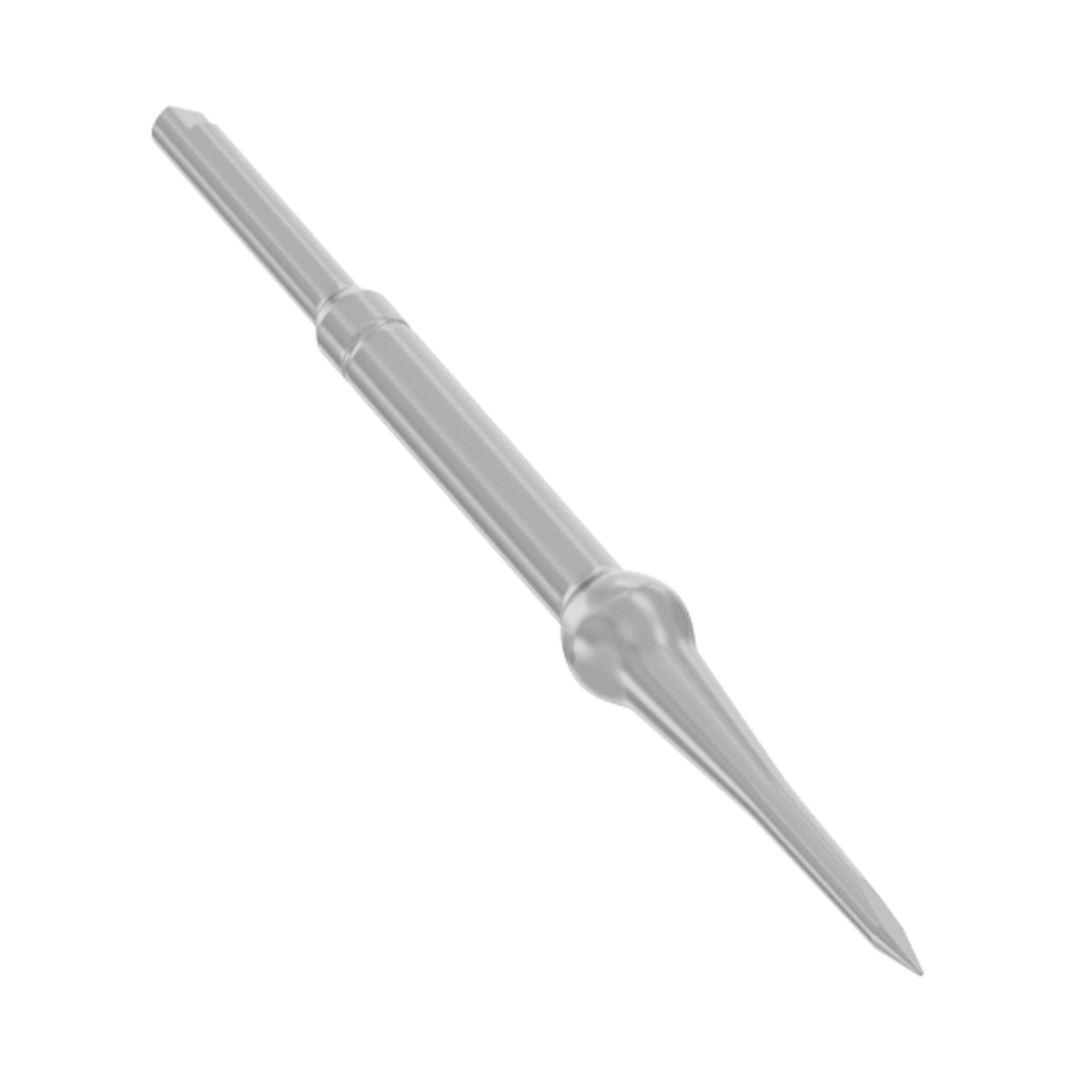
A mini-screw is only as reliable as the driver that seats it. Hand drivers give tactile feedback during insertion, which matters when the screw approaches a root. Latch-type drivers on a contra-angle handpiece give control in posterior sites where hand access is limited.
A universal autoclavable kit collects the drivers, the hand handle and the initial-point drill in one tray, which removes the risk of discovering mid-procedure that the driver for a given head is not sterile. Adjustable archwire stops such as the Gurin lock complete the setup for space closure mechanics.

Common Placement Failures and How to Avoid Them
Root Contact
The most consequential error. It presents as sudden resistance during insertion, and it risks damage to the periodontal ligament and to the screw's own stability. Radiographic planning of the insertion corridor, and stopping at unexpected resistance rather than driving through it, are the practical safeguards.
Early Mobility
Mobility immediately after placement points to insufficient cortical engagement or to an oversized pilot preparation. Loading protocols vary between systems and between clinicians; verify the loading interval against the protocol you follow rather than against a general rule.
Soft Tissue Irritation
Usually a transmucosal height mismatch rather than a hygiene failure. When the collar is shorter than the tissue depth at the site, the head is partly submerged and the tissue around it stays inflamed.
Ordering Compatible Anchorage Components
dip dental™ supplies orthodontic mini-screws, drivers, kits and archwire stops to clinics and laboratories worldwide, at a significantly more competitive price than the original manufacturers' components. Screws are stocked in both 1.5 mm and 2.0 mm diameters with the transmucosal heights above, and ship from stock.
The same verification logic that applies to implant prosthetics applies here: confirm the interface and the specification before ordering. Our guides on OEM versus compatible components and on why brand compatibility matters when ordering set out what to check. For adhesive removal after debonding, see our overview of surgical and finishing burs.
Browse the full TAD mini-screw range for screws, drivers, kits and stops.
Frequently Asked Questions
What diameter mini-screw should be used between the roots?
A 1.5 mm screw is the usual choice for interradicular placement, because the corridor between adjacent roots is narrow and clearance from the periodontal ligament on both sides is the limiting factor. Wider 2.0 mm screws are reserved for extraradicular sites such as the buccal shelf and the infrazygomatic crest, where cortical bone is thicker.
What is the difference between a buccal shelf screw and a standard interradicular screw?
Diameter and transmucosal height. The buccal shelf screw is 2.0 mm with a 4.0 mm collar because it is placed through thicker soft tissue into thicker cortical bone, while the interradicular screw is 1.5 mm with a short collar for placement in attached gingiva between roots.
Can an orthodontic mini-screw be loaded immediately after placement?
Loading intervals vary by system and by protocol, so verify against the protocol you follow. Mini-screws achieve their stability through mechanical cortical engagement rather than osseointegration, which is the reason early loading is discussed at all, but the interval itself is a clinical decision rather than a product specification.
What does T/M mean in a mini-screw specification?
T/M is the transmucosal height, the smooth collar between the head and the threaded portion that passes through the mucosa. It should match soft tissue depth at the placement site: 1.0 mm for attached gingiva between roots, 4.0 mm for the buccal shelf, 8.0 mm for the infrazygomatic crest.
Which driver fits a 1.5 mm TAD?
Driver fit follows the screw head rather than the thread diameter, so a screw head and its driver must be matched as a pair. A universal autoclavable kit covers the common head types along with the hand handle and initial-point drill, which avoids mismatches mid-procedure.
The brand names referenced in this article belong to their respective owners. dip dental™ is not affiliated with, endorsed by, or a distributor for any of them.