
Choosing an implant is usually discussed as a surgical decision, but the connection at the top of it is a restorative one, and it outlasts the surgery by years. Every abutment, coping, analog and screw that follows is determined by that interface.
dip dental™ supplies its internal hex implants as one connected system: a shared 2.42 mm hex on the standard platform, a shared 2.00 mm hex on the narrow platform, and one restorative inventory that fits every body on each. This guide covers only the internal hex range and sets out which body answers which clinical situation.
Why the connection decision outlasts the surgery
The connection determines the entire restorative chain. It sets which abutments seat, which impression copings and analogs match, which scan bodies the laboratory can use, and what the practice has to keep on the shelf for years afterwards.
Standardizing on fewer connections across a practice reduces the number of restorative components that have to be stocked, and it makes a second-stage restoration easier when the surgical record is incomplete. Within the internal hex range itself, every body shares the same restorative logic, so the choice between them is a surgical one, not a restorative one.
Internal hex: the broadest connection family in the range
Internal hex is the most heavily represented connection in the catalog, and it carries the broadest choice of implant bodies. Hex width is one of the specifications that governs restorative matching, Ø2.00 mm on the narrow platform and Ø2.42 mm on the standard platform, and it is read alongside the implant body rather than on its own.
Narrow and standard hex
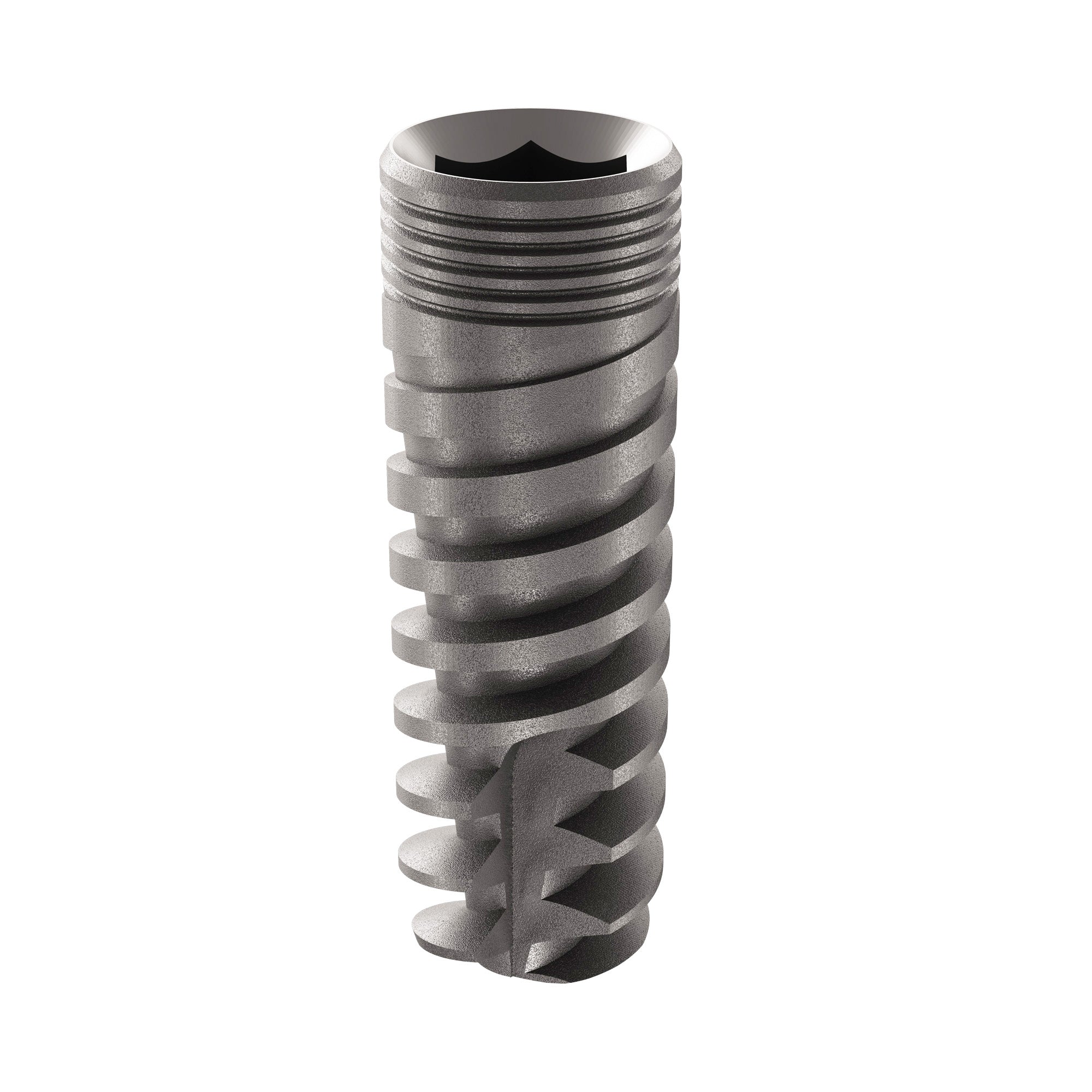
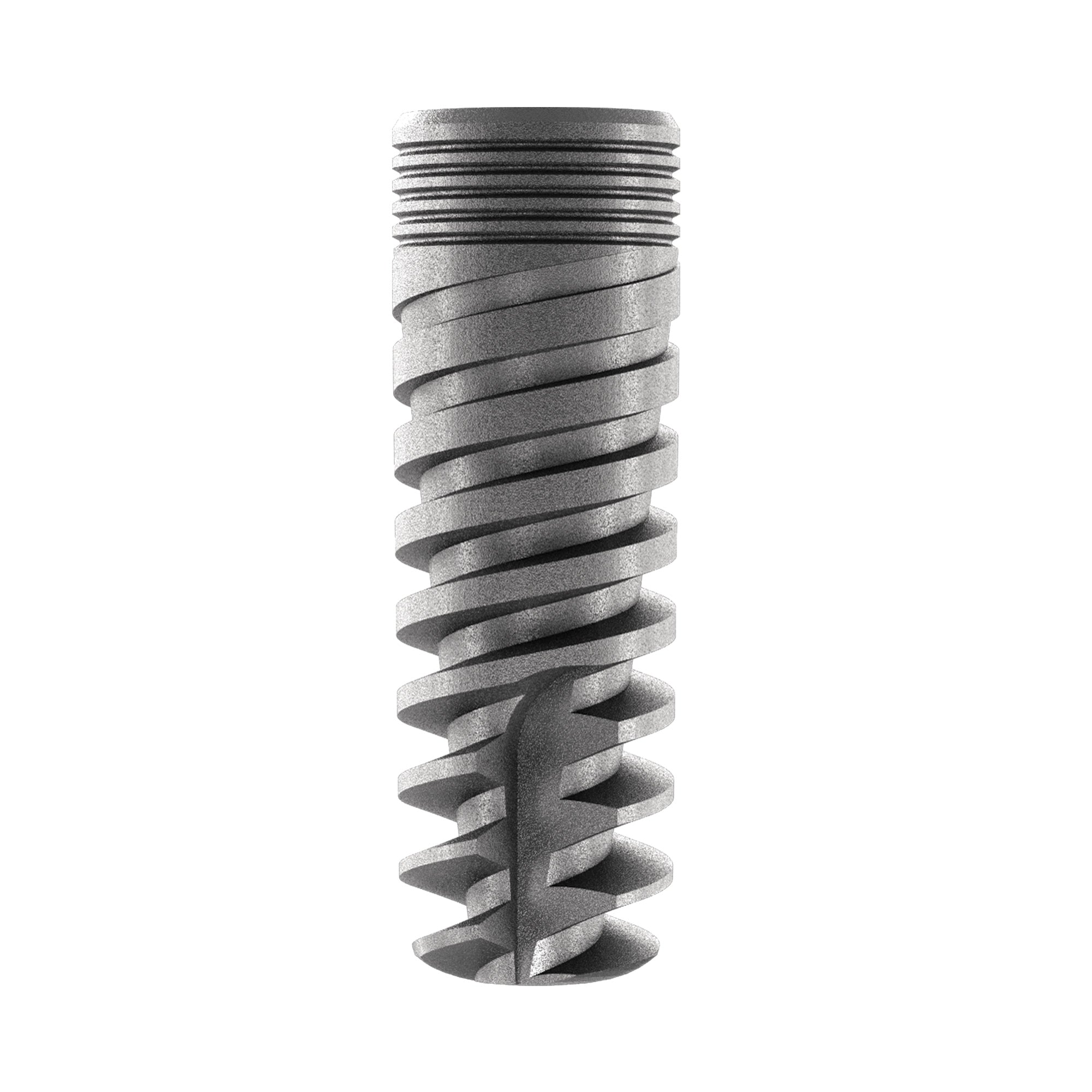
The DSI David EVI Spiral Implant is supplied on the standard internal hex platform, with a narrow version for reduced ridge width and limited interdental space. It uses a double thread design with annular microgrooves along the body, intended to distribute load and reduce bone tension during healing, and an ultra-pure RBM surface treatment. It ships in a mountless, sterile titanium tube and is installed with a single universal driver, so no separate tooling is needed for retrieval or restoration. Each platform takes the restorative components matching its own hex width, so the site and the restorative inventory that follows are both part of the decision.

The spiral lines
Four spiral bodies sit on the same standard internal hex platform, and the choice between them comes down to surface treatment and thread geometry rather than the connection, which does not change.
The Premium Spiral line is a tapered, self-tapping body with dual threads and an SLA surface, self-drilling with a bone-condensing effect suited to soft bone and extraction sites, for both immediate loading and traditional two-stage protocols. The Premium Spiral RBM line carries the same dual-thread geometry with an RBM surface instead of SLA. The Premium Spiral Green Line adds reverse-cutting flutes that allow slight repositioning of the implant during surgery, together with a flat apex suited to sinus floor elevation in the posterior maxilla, on an SLA surface. The Classic Cone Line is a straight, slightly conical body with three cutting flutes and micro rings on the coronal part for added surface area; its threads are non-aggressive and do not condense bone, which the range positions for denser bone and as an anchor implant in multi-unit restorations.

Immediate loading and dual thread
The Blue Line Spiral and the Smart Dual Thread Spiral are both built around soft-bone handling, but for different reasons. The Blue Line Spiral uses dual threads and micro-grooves along the neck to compress soft bone during insertion, with aggressive threads for primary stability; it is positioned for fresh extraction sites and multi-unit immediate loading. The Smart Dual Thread Spiral uses a Hybrid Dual Thread design, two different thread types along one body, developed from histological analysis of cortical and cancellous bone to reduce the volume of bone removed during drilling while keeping primary stability, particularly on narrow ridges. Both carry an SLA surface and should be selected against the bone quality and loading protocol planned for the case rather than on thread design alone.

Surface treatments across the range
Two surface treatments recur across the internal hex spiral bodies. SLA, sand-blast large-grit acid-etch, sandblasts the titanium with aluminum oxide particles and then acid-etches it, producing a macro and micro roughness sized for cell attachment. RBM, resorbable blast media, blasts with a biocompatible calcium phosphate instead of alumina or silicon carbide, so no acid step is needed to clear residue from the surface. The Premium Spiral line, the Premium Spiral Green Line, the Classic Cone Line and the Blue Line and Smart Dual Thread implants carry SLA; the Premium Spiral RBM line, the David EVI, the Grip Basal/Cortical/Pterygoid and the Zygomatic implant carry RBM. Neither is a marker of quality over the other; they are two accepted approaches to the same goal, and the choice sits with the surgeon's own protocol.
Implants for compromised or atypical anatomy
Where conventional placement is not available, the range extends into bodies that engage different bone, and all remain on the same internal hex connection.
Basal, cortical and pterygoid
The Grip Basal, Cortical and Pterygoid implant is a tissue level body that engages cortical or pterygoid bone, which resorbs less than the alveolar ridge and remains available even in patients with significant bone loss. Its threads are described as sharp and aggressive, allowing placement directly into an extraction site without waiting for osseointegration or grafting first. Because it seats at tissue level with a smooth polished neck, the manufacturer positions it against long-term peri-implantitis risk around that neck. The PteryGrip variant is configured for the posterior maxilla and the pterygomaxillary region specifically, with the same deep-thread, smooth-neck, RBM-surface approach. Both are used only in protocols that require specific surgical training.

Zygomatic
The DSZygo Zygomatic Implant anchors in the zygomatic bone for severely resorbed or atrophic maxillae, including maxillectomy defects, and keeps the same internal hex connection as the rest of the range so restorative components do not change. It is listed in lengths from 30 mm to 60 mm in 2.5 mm increments to reach the zygomatic bone from different approach angles, with a smooth polished body for insertion and aggressive apical threads for retention once seated. It is positioned for immediate function, intended to reduce the number of clinical visits and the invasiveness of the procedure compared with grafting first and placing later.

Matching the restorative components to the connection
Once the platform is chosen, the components follow it directly. The table below maps the platform to the component families held for it.
| Platform | Implant bodies | Restorative components |
|---|---|---|
| Internal hex Ø2.42 mm | David EVI, Premium Spiral, Premium Spiral RBM, Premium Spiral Green Line, Classic Cone Line, Blue Line Spiral, Smart Dual Thread Spiral, Grip Basal/Cortical/Pterygoid, PteryGrip, Zygomatic | Abutments, PEEK and temporary abutments, healing caps, impression copings, analogs, ti-bases, scan bodies, ball attachments |
| Internal hex Ø2.00 mm | Narrow David EVI and narrow Premium Spiral bodies | Narrow platform abutments, analogs and attachments |
Selecting the analog and the transfer against the platform is covered in our guide to choosing a lab analog, and the abutment families in our guide to dental abutments for dental professionals. The surgical side is covered in the guide to implant drills.
The full internal hex range is in the Internal Hex Implants collection.
Frequently Asked Questions
What is an internal hex implant connection?
An internal hex connection is a hexagonal socket inside the implant that receives a matching hex on the abutment, providing anti-rotation engagement. The specification that matters when ordering restorative components is the hex width, commonly Ø2.00 mm on narrow platforms and Ø2.42 mm on standard platforms in this range.
What is the difference between SLA and RBM surface treatment?
Both are ways of roughening the titanium surface to encourage bone contact. SLA sandblasts with aluminum oxide and then acid-etches the surface. RBM sandblasts with a biocompatible calcium phosphate instead, so it does not need an acid-etch step afterward. Within this range, the choice is fixed per implant body rather than selectable, so it is one more factor in choosing between bodies, not a separate variant of the same body.
When is a basal or cortical implant indicated?
Basal and cortical bodies engage cortical or pterygoid bone and are used where alveolar ridge volume is insufficient for a conventional implant and grafting is not being undertaken, including immediate placement in an extraction site. They are placed under protocols that require specific surgical training, and case selection should follow those protocols rather than ridge dimensions alone.
Do all implants in the range share the same restorative components?
Components are shared within a platform, not across the whole range. Every implant on the standard Ø2.42 mm internal hex platform, from the spiral bodies through the basal, pterygoid and zygomatic bodies, draws on the same abutments, copings and analogs. The narrow Ø2.00 mm platform has its own matching set.