
In the evolving world of dental implantology, implant-abutment connection design plays a crucial role in long-term success, mechanical stability, and biological integration. While implants may look similar externally, the internal geometry determines how the abutment fits, how forces are distributed, and how the restoration performs over time.
Today, the global market revolves around several main connection types - internal hex, external hex, conical (Nobel-style), Morse taper (Korean style), and the unique Straumann Bone Level® design. Each has its own advantages, engineering philosophy, and loyal following among clinicians.
Let’s explore the key characteristics, differences, and clinical implications of each system.
1. Internal Hex Connection
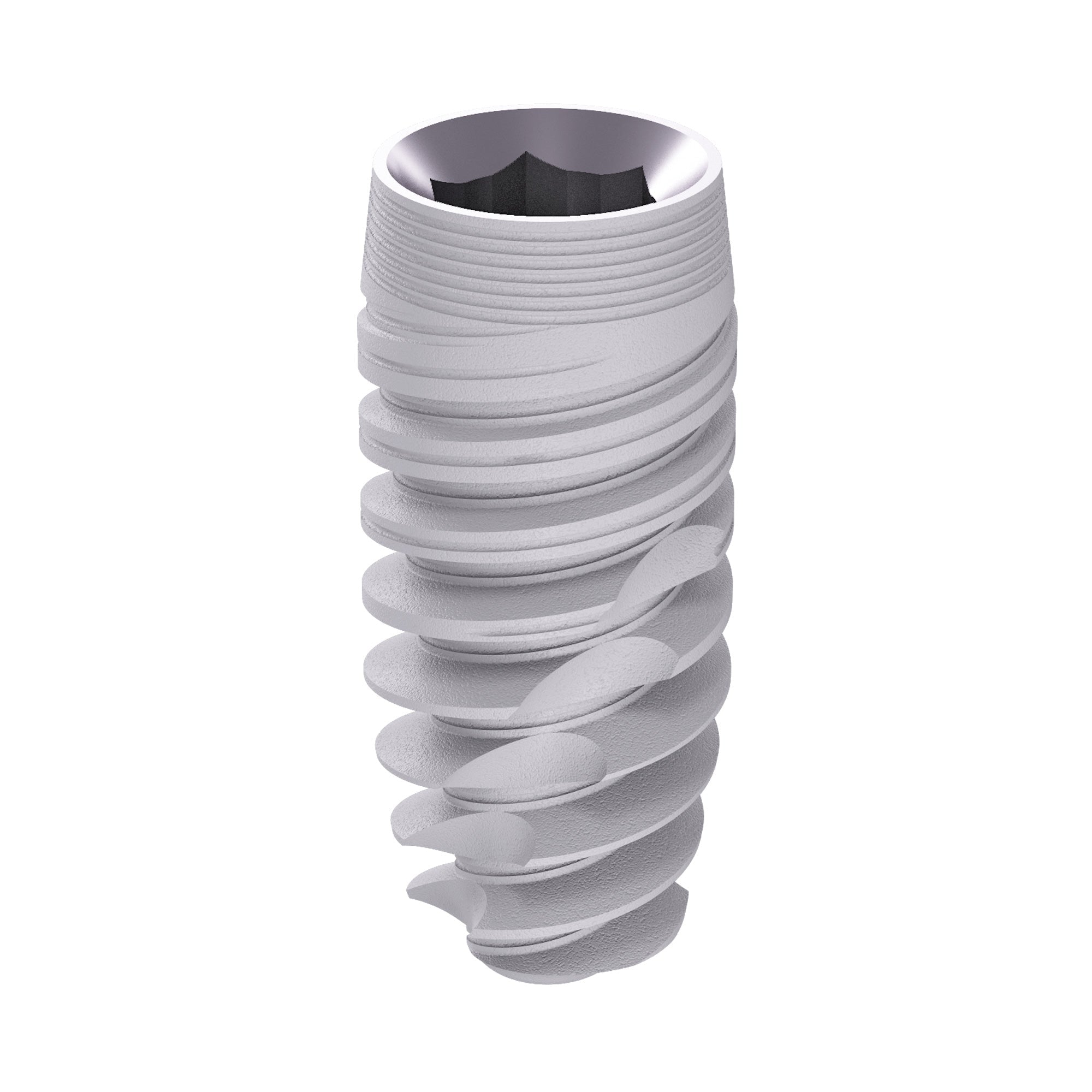
The internal hex connection remains one of the most widely used designs worldwide. This connection type features a hexagonal shape located inside the implant body, where the abutment’s male portion locks in place.
Advantages:
-
Provides excellent anti-rotation stability.
-
Protects the abutment screw from lateral stress.
-
Simplifies component positioning and replacement.
-
Compatible across a wide range of brands and systems.
The internal hex is used by numerous leading manufacturers such as Neodent®, Alpha Bio®, Zimmer®, BioHorizons®, and Adin®. Because of its simplicity and mechanical reliability, it has become the “universal” standard, especially for general-purpose implantology.
This system is also known for its broad prosthetic compatibility - a significant advantage for laboratories and clinics looking to reduce inventory costs while maintaining clinical precision.
2. External Hex Connection
The external hex connection was one of the first standardized designs, introduced by Brånemark and later adopted by early systems such as Nobel Biocare®. Here, the hex protrudes above the implant platform, and the abutment fits over it.
Advantages:
-
Proven reliability through decades of clinical use.
-
Simple, straightforward prosthetic workflow.
-
Ideal for retrievable restorations.
However, the external hex has gradually lost market share due to limitations in mechanical stability and the tendency for micro-gaps or screw loosening under high occlusal loads. Despite this, it remains in use - particularly for legacy restorations and in situations where vertical space is limited.
3. Conical Connection (Nobel Active®-style)
The conical internal hex connection represents the next step in implant-abutment evolution. It combines internal geometry with a tapered, friction-fit design, providing a tight seal that minimizes micro-movement and bacterial leakage.
Systems like Nobel Biocare® Nobel Active, BioHorizons® Tapered Internal, and Implant Direct® Legacy have made this design mainstream.
Advantages:
-
Exceptional implant-abutment stability.
-
Superior resistance to rotational and lateral forces.
-
Reduced risk of peri-implantitis due to a tighter bacterial seal.
-
Excellent for immediate loading protocols.
Clinicians often prefer this connection for esthetic zones and soft bone cases, as it ensures high torque and precise emergence profiles.
4. Morse Taper (Korean Conical Systems)
Korean implant manufacturers such as MegaGen®, Osstem®, NeoBiotech®, and Dentium® have refined the Morse taper into one of the most precise systems available. This connection uses a deep conical angle (often around 8 degrees) that creates a cold-weld seal between implant and abutment.
Advantages:
-
Eliminates micro-gaps almost completely.
-
Provides long-term mechanical stability without screw loosening.
-
Promotes excellent soft tissue sealing and bone preservation.
-
Allows for smaller prosthetic platforms and more esthetic outcomes.
The Morse taper has become a defining feature of modern Korean implant systems, known for their high precision and affordable quality. Many clinicians consider this the perfect blend of mechanical and biological success.
5. Straumann® Bone Level Connection
Straumann® stands apart with its Bone Level® connection, which uses a patented internal conical geometry with a unique four-degree taper. This system allows for high stability, precise indexing, and excellent bone-level adaptation.
Advantages:
-
Precision-engineered internal conical connection for optimal load distribution.
-
High stability under functional stress.
-
Proven track record in both esthetic and posterior zones.
-
Compatible with the world-renowned Roxolid® titanium-zirconium alloy and SLActive® surface.
Straumann’s innovation is often seen as the benchmark for premium implant systems, combining Swiss engineering with decades of clinical research.
Comparative Overview
| Connection Type | Stability | Seal Against Bacteria | Abutment Rotation | Common Brands |
|---|---|---|---|---|
| Internal Hex | Very Good | Moderate | Excellent | Neodent®, Alpha Bio®, Zimmer®, BioHorizons® |
| External Hex | Good | Moderate-Low | Moderate | Nobel Biocare®, MIS® |
| Conical (Nobel Active® style) | Excellent | High | Excellent | Nobel Biocare®, Implant Direct®, BioHorizons® |
| Morse Taper (Korean) | Exceptional | Very High | Excellent | MegaGen®, Osstem®, Dentium®, NeoBiotech® |
| Straumann Bone Level® | Exceptional | Very High | Precise | Straumann® |
Market Trends
Recent studies suggest that internal hex and conical connections together dominate over 70% of the global implant market.
-
Internal hex systems remain the preferred option for general implantology due to their wide compatibility and cost efficiency.
-
Conical and Morse taper designs continue to grow in popularity, especially in aesthetic and immediate-load cases, where precision and soft tissue management are critical.
-
Straumann’s Bone Level® maintains its strong premium market position, appealing to clinicians focused on high-end, research-driven implantology.
Conclusion
Choosing the right implant connection depends on clinical needs, restorative goals, and personal preference.
At dip dental™, we proudly offer a wide selection of dental implant parts compatible with all major systems - including Nobel Biocare®, Neodent®, Straumann®, MegaGen®, Osstem®, Dentium®, Zimmer®, BioHorizons®, and Alpha Bio®.
Every connection type has its unique benefits, but all share one goal - ensuring long-term stability, precision, and patient satisfaction.
Explore our full range of compatible solutions and discover why dip dental™ is the trusted marketplace for quality, compatibility, and innovation in dental implantology.