Rethinking the role of Ti-Bases in multi-unit implant workflows
In full-arch implant restorations, every component between the prosthesis and the implant matters.
For years, Ti-Bases have been widely used as an intermediate connection between the restoration and the multi-unit abutment. They provide a familiar workflow, support digital design, and create a standardized interface between the prosthesis and the MUA.
But in some clinical and laboratory workflows, adding another component also means adding another interface, another cementation step, another inventory item, and another potential point of complexity.
This is where direct connection screw systems become interesting.
The clinical idea: fewer components, more direct control
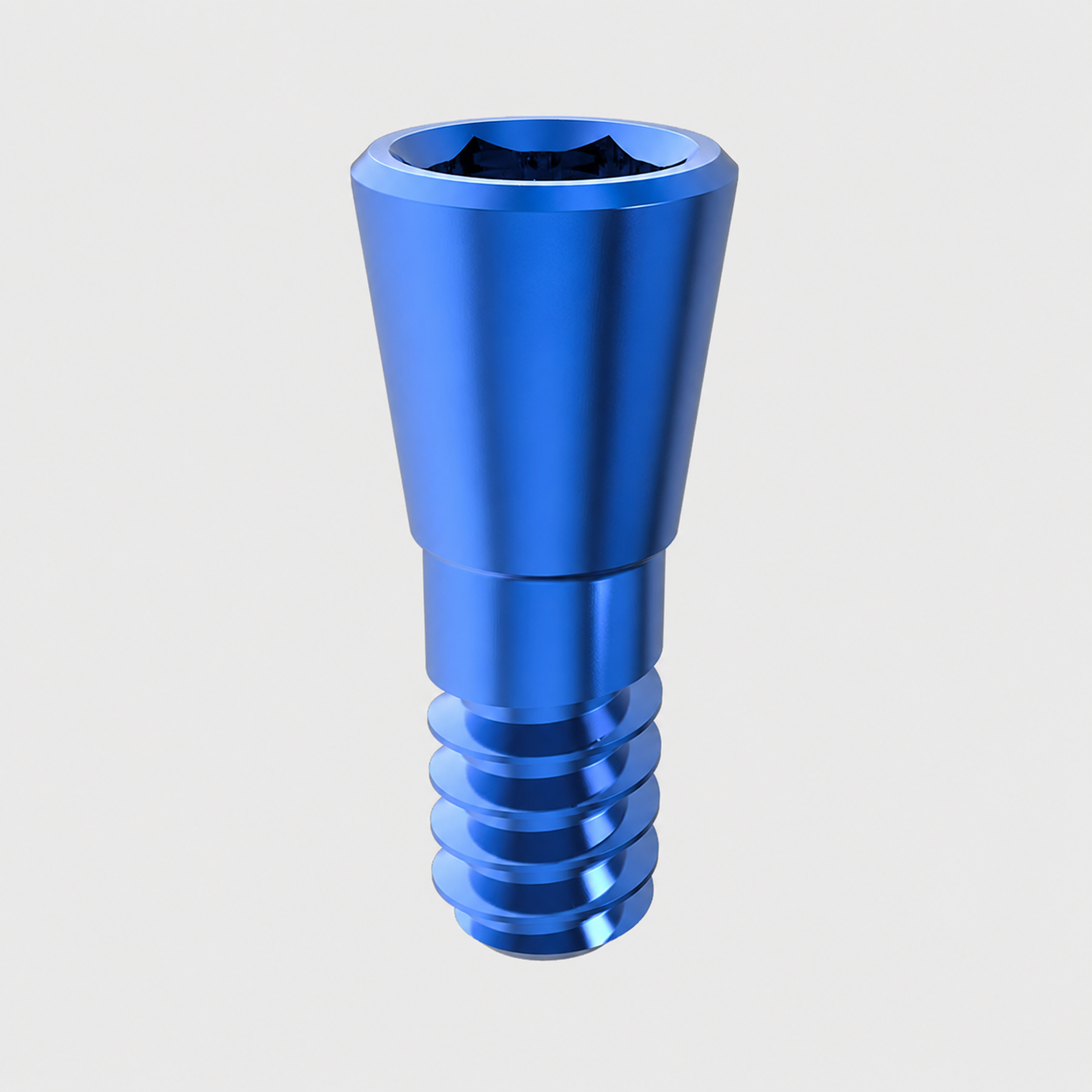
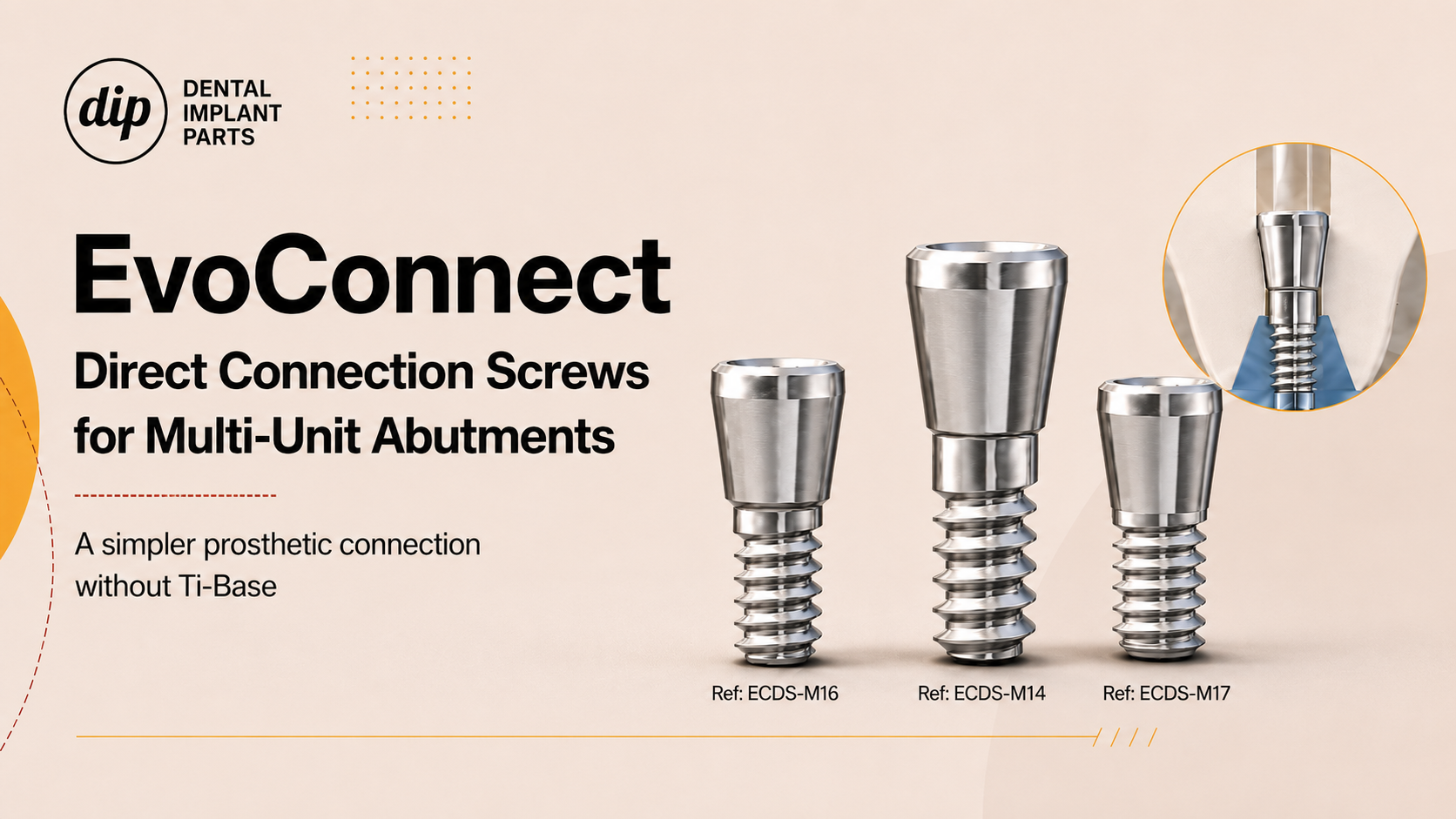
EvoConnect Direct Connection Screws are designed to allow restorations to connect directly to multi-unit abutments, without the need for an intermediate Ti-Base component.
The concept is simple but important: the restoration is designed with a screw channel, and the specially shaped screw head locks securely within that channel to create a stable screw-retained connection.
For dental labs and restorative teams, this can create a cleaner workflow in selected cases, especially when working with digitally designed full-arch bridges, hybrid restorations, or screw-retained prosthetics.
Why this matters in the lab
In digital dentistry, small connection details can have a large effect on the final result.
When working with multi-unit restorations, the technician needs to think about:
- Screw channel geometry
- Material thickness around the screw channel
- Prosthetic passivity
- Screw access position
- Occlusal space
- Restoration material
- Library accuracy in Exocad or 3Shape
- Final torque protocol
The EvoConnect system supports digital workflows and is designed to work with materials such as acrylic, composite resin, PMMA, graphene and zirconia, making it relevant for both temporary and final restorations depending on the clinical plan and material selection.
The screw head is the key
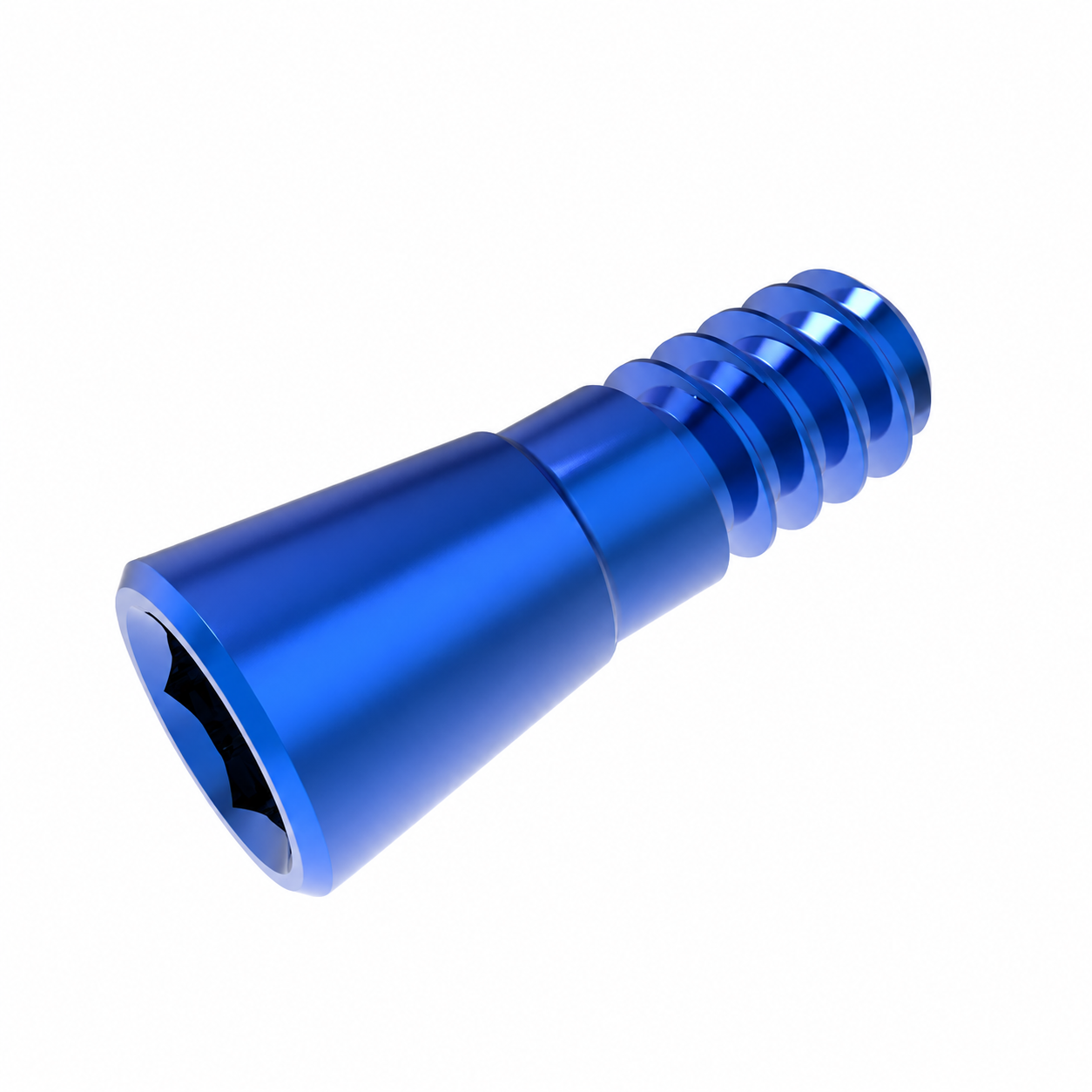
The most important part of the system is not only the screw itself, but the geometry of the screw head.
The specially designed screw head is intended to engage securely within the screw channel. This creates a direct restoration-to-MUA connection and helps reduce the need for a separate Ti-Base interface.
That detail is important because in full-arch cases, screw stability, seating, and controlled tightening are critical parts of the restorative workflow.
Compatible with Rosen Screws® workflows
Another important point is compatibility.
The EvoConnect concept is designed to support workflows that are compatible with Rosen Screws / Rosen Screw-style direct connection systems, allowing labs and clinicians who are already familiar with this type of screw-retained prosthetic approach to work within a similar restorative concept.
As always, the clinician and technician should verify the exact screw diameter, MUA system, digital library, restoration material, and torque recommendation before finalizing the case.
Where this type of solution can be useful
Direct connection screws may be especially relevant in cases where the clinician and lab want to simplify the prosthetic stack and reduce intermediate components.
Full-arch screw-retained restorations
Where a direct MUA connection may simplify the prosthetic design.
Digitally designed bridges
Especially when working from a verified digital library and a controlled screw channel design.
Temporary PMMA or acrylic restorations
Where speed, simplicity and retrievability are important.
Selected zirconia or composite-based restorations
When the design, material thickness and screw channel are properly planned.
Cases where vertical space is limited
Reducing one intermediate component may sometimes help the restorative team manage prosthetic height more efficiently.
Important clinical note
Direct connection does not mean “one-size-fits-all.”
As with any implant prosthetic workflow, the clinician and dental technician must verify the exact MUA system, screw diameter, prosthetic design, digital library, torque recommendation, restoration material, available prosthetic space, and final torque protocol before use.
The success of the workflow depends not only on the screw, but on the full restorative plan.
Product spotlight: EvoConnect Direct Connection Screws
EvoConnect Direct Connection Screws for Multi-Unit Abutments are available in different screw options, including M1.4, M1.6 and M1.72 configurations.
The system is designed as a direct connection solution for implant-based restorations such as bridges or dentures connected to multi-unit abutments without an intermediate Ti-Base.

Key points
- Direct connection of restorations to multi-unit abutments
- No intermediate Ti-Base required
- Special screw head geometry for secure engagement in the screw channel
- Compatible with Rosen Screws / Rosen Screw-style workflows
- Compatible with acrylic, composite resin, PMMA, graphene and zirconia workflows
- Supports digital workflows with Exocad and 3Shape libraries
- Designed for 1.25 hex drivers
- Available in M1.4, M1.6 and M1.72 options
Explore the product
EvoConnect Direct Connection Screws for Multi-Unit Abutments
A pack of 50 screws for only $375 -
https://dipdental.com/collections/rosen-screw
Final takeaway
In modern implant dentistry, the smartest solutions are often the ones that simplify the workflow without compromising precision.
Direct connection screws are not just another small prosthetic component. In the right case, they can help reduce restorative complexity, support digital workflows, and give the lab more control over the prosthetic design.
For full-arch and MUA-based restorations, this is a small component worth understanding.