
What Is SPONGE GRAFT?
SPONGE GRAFT is a term used for a bone graft plug designed to support socket and ridge preservation after a tooth extraction. Rather than handling loose particulate graft material, clinicians can place a shaped plug into the extraction site. This approach may help make graft placement more straightforward while supporting the early healing environment.
A graft plug commonly combines a collagen structure with a mineral component. The collagen portion can help stabilize the blood clot, while the mineral phase acts as a scaffold that may support bone formation over time. The goal is not simply to fill a socket. The goal is to help preserve the shape and volume of the ridge for future treatment planning, such as implant placement or prosthetic rehabilitation.
For dental teams, efficiency matters. A product that is easy to handle can reduce unnecessary chairside steps and help create a consistent surgical routine. For patients, preserving the ridge may support more treatment options later. That is why socket preservation has become an important part of modern extraction planning.
Why Socket Preservation Matters After Extraction
After a tooth is removed, the surrounding bone naturally changes during healing. The extraction socket may lose width and height as the body remodels the area. This is a normal biological process, but it can make later implant treatment more challenging.
Socket preservation aims to reduce the amount of ridge collapse that can occur after extraction. It may support a more favorable foundation for future restorative treatment. In many cases, preserving available bone can help clinicians avoid more extensive grafting procedures later.
A well-planned extraction site should be assessed before the tooth is removed. Important factors include the thickness of the socket walls, periodontal health, infection, soft-tissue quality, and the patient’s future treatment goals. A graft plug may be one useful tool within that broader clinical plan.
How a Bone Graft Plug Works
Clot Stabilization
Healing begins with a stable blood clot. A collagen-based plug may help support this early phase by providing a physical structure within the socket. Stable clot formation is important because it creates the environment where healing cells can begin their work.
Space Maintenance
A graft material can help maintain space inside the extraction socket. This is important because the body needs room to form new tissue. When the site collapses too quickly, the final ridge shape may be less favorable for future treatment.
Osteoconductive Scaffold Support
Many graft plugs include a mineral component. This component is generally osteoconductive, meaning it provides a surface or scaffold that can support the growth of new bone. It does not “create” bone on its own. Instead, it helps guide the body’s natural healing response.
Key Benefits of SPONGE GRAFT
One of the biggest advantages of SPONGE GRAFT is its simplified handling. A shaped plug can be easier to place than loose particles, especially when the clinical goal is socket preservation. It may reduce the need for mixing materials, pre-hydration, or managing loose granules during placement.
Other potential benefits include:
- A compact, ready-to-place format
- Support for clot stabilization
- Easier handling in extraction sockets
- Reduced risk of particulate material dispersing during placement
- A structured scaffold for ridge-preservation procedures
- A workflow that may save chairside time
The exact benefits depend on the product formulation, the surgical technique, and the condition of the extraction site. Clinicians should always follow the manufacturer’s instructions for use and apply sound clinical judgment.
Materials Used in Sponge-Style Graft Plugs
Collagen Matrix
Collagen is widely used in dentistry because it is familiar, biocompatible, and useful for supporting early healing. In a graft plug, collagen can help the material adapt to the socket and support blood clot stability.
Synthetic Calcium Phosphate
Some products combine collagen with synthetic calcium phosphate or hydroxyapatite materials. These minerals are designed to resemble aspects of the inorganic structure of bone. They may offer a slowly resorbing scaffold that supports space maintenance during healing.
Bovine Xenograft
Other graft plugs use bovine-derived mineral. Deproteinized bovine xenograft is commonly used as an osteoconductive material in dental grafting. It may be selected when a clinician wants a mineral scaffold with a different resorption profile or handling characteristic.
When Clinicians May Consider SPONGE GRAFT
Intact Extraction Sockets
A graft plug may be especially useful after an atraumatic extraction where the socket walls remain intact. In these cases, the clinician may want to preserve the ridge contour and create a favorable site for a future implant.
Compromised Socket Walls
Sites with periodontal defects, missing socket walls, or more complex anatomy require careful assessment. A plug-based material may still be considered, but the clinician may need to add other measures, such as a membrane, additional graft material, or a different surgical approach.
Product choice should never be based on convenience alone. The condition of the site, the patient’s health, and the final restorative plan should guide treatment.
A Simple Placement Workflow
A typical socket-preservation workflow may include the following steps:
- Perform an atraumatic extraction whenever possible.
- Thoroughly debride the socket and assess the bony walls.
- Select a graft material appropriate for the defect and treatment plan.
- Place the graft plug according to the manufacturer’s instructions.
- Adapt soft tissue and secure the site with sutures when indicated.
- Monitor healing and plan the next phase of treatment.
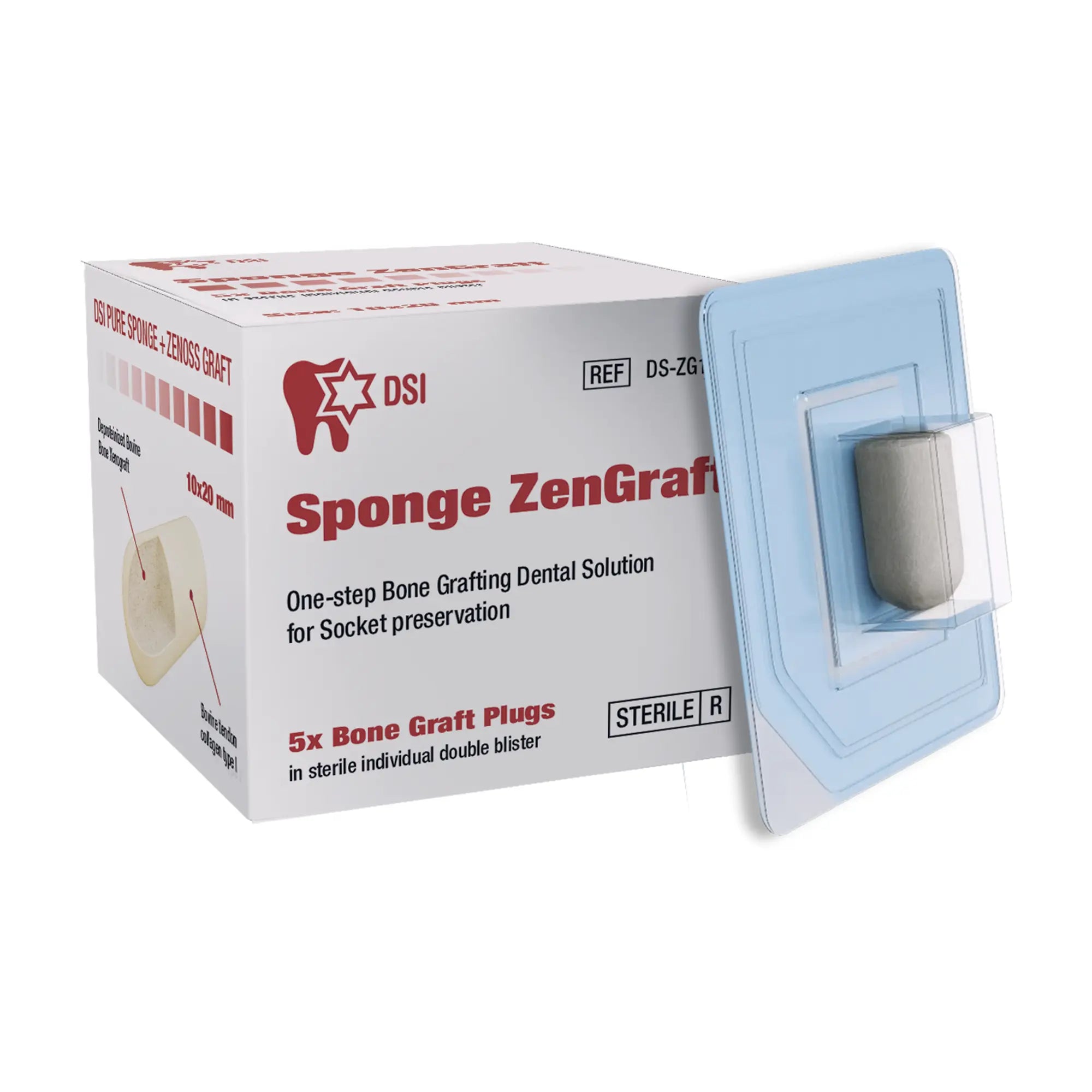
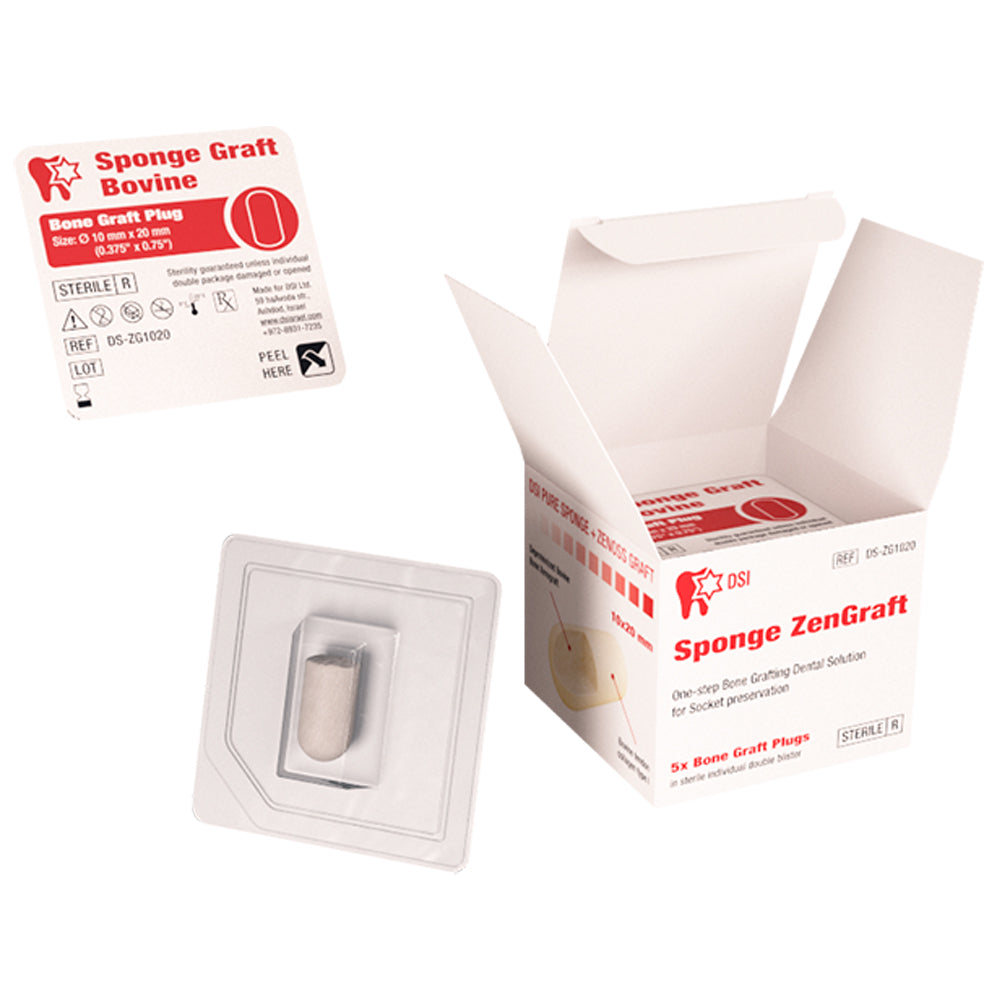
The specific protocol varies by product and clinical situation. Some bone graft plug systems are marketed as dry-placement options that do not require pre-hydration or particulate mixing. The product details for SpongeGraft and Sponge ZenGraft describe these formulations as one-step socket-preservation options, with different material compositions and suggested indications.
Choosing Between Synthetic and Bovine Mineral Options
The right material depends on the case. A synthetic mineral option may be attractive when the clinician prefers calcium phosphate and hydroxyapatite components. A bovine-derived option may be chosen for its handling characteristics and osteoconductive profile.
For example, the SpongeGraft product is described as a combination of bovine collagen and synthetic TCP/HA, while Sponge ZenGraft is described as a bovine collagen and deproteinized bovine xenograft formulation. The collection identifies intact extraction sockets as an ideal indication for SpongeGraft and describes Sponge ZenGraft for more complex sites, including compromised socket walls and periodontal or peri-implant defects.
Frequently Asked Questions
What is SPONGE GRAFT used for?
SPONGE GRAFT may be used for socket and ridge preservation after extraction. It can help support clot stabilization and provide a scaffold within the healing site.
Is a bone graft plug the same as loose graft particles?
No. Loose graft particles and graft plugs can both be used in bone-grafting procedures, but they differ in handling. A plug is pre-formed, while particles are placed as loose granules.
Does every extraction need socket preservation?
No. The need for socket preservation depends on the patient’s anatomy, future treatment plan, tooth location, and the condition of the socket walls.
Can SPONGE GRAFT be used for implant preparation?
It may be used as part of a ridge-preservation plan before future implant treatment. However, implant timing and site readiness must be determined by the treating clinician.
How long does healing take after socket preservation?
Healing time varies based on the patient, surgical site, graft material, and treatment plan. Product-specific guidance should be reviewed alongside clinical examination and imaging.
Is a membrane always required with a graft plug?
Not always. Some plug systems are designed for simplified placement without a membrane in selected cases. More complex defects may require a membrane or additional regenerative techniques.
Conclusion
SPONGE GRAFT can be a practical option for clinicians seeking a streamlined approach to socket preservation. Its plug format may simplify placement, support clot stability, and provide an osteoconductive scaffold during healing. Still, no graft material replaces careful diagnosis, atraumatic technique, and a clear restorative plan.
For clinicians evaluating plug-based graft materials, it is important to compare composition, indication, resorption profile, handling, and manufacturer guidance. The dip dental™ bone graft plug collection provides product-specific information on SpongeGraft and Sponge ZenGraft formulations.
This article is for educational and marketing purposes only and is not a substitute for professional clinical training, product instructions for use, or patient-specific medical advice.