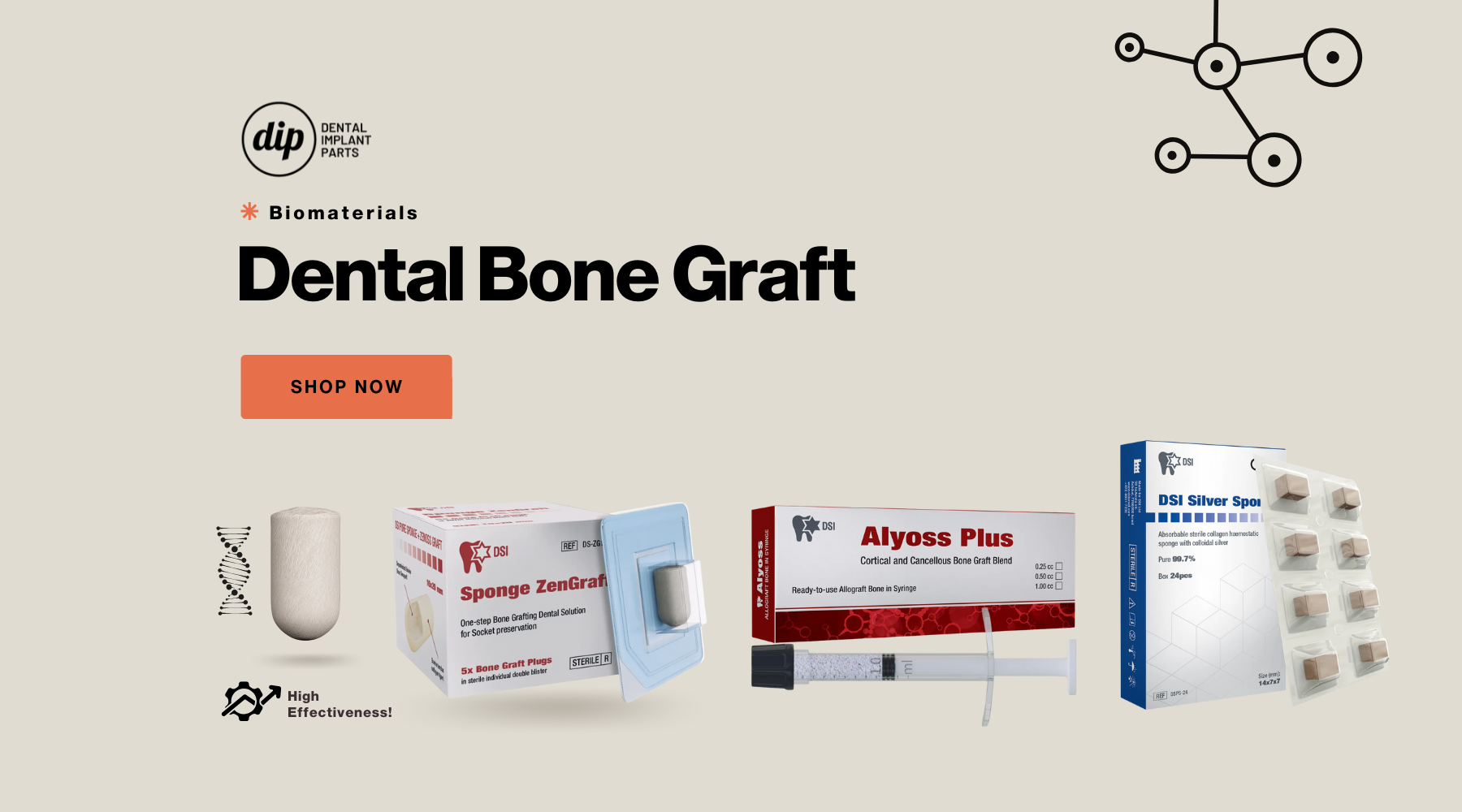
Whether you're a clinician performing socket-preservation after extractions or prepping for complex full-arch restorations, choosing the right dental bone graft is crucial. At dip dental™, we believe in giving dental professionals both knowledge and tools - which is why we offer an extensive and growing line of grafting materials: granules, blocks, gels, membranes, and collagen sponges. Here's a deep dive into each type - what they do, why they work, and how to pick the best match for your cases.
1. Granules: Versatile & Reliable
Bone graft granules are among the most common options - they’re ideal for filling defects or preserving sockets after extraction.
Why dentists choose them:
-
Handling flexibility: Granules can be packed into small voids or layered for bigger defects.
-
Material variety: Our granules come in allograft (human-derived), xenograft (bovine/porcine), or alloplast (synthetic) forms.
-
Biological support: Act as scaffolds (osteoconduction), encouraging your patient’s existing bone to grow into the graft.
2. Block Grafts: Structural Support for Ridge Augmentation
When you're working with narrow ridges or planning implant placement in atrophic sites, block grafts offer rigid, structural support.
Clinicians love block grafts because:
-
They can be shaped to rebuild bone height or width.
-
They provide long-term volume stabilization - ideal for delayed implant placement.
-
Our blocks come in both cortical and cortico-cancellous compositions, depending on your needs.
3. Gel-Formulated Grafts: Easy and Patient-Friendly
Imagine a graft you can syringe directly into a socket - no packing, no mess.
That's bone graft gel in a nutshell:
-
Precision placement - great in tight surgical sites.
-
Hydrating consistency - integrates quickly with bleeding tissue.
-
Bacteriostatic options are available to reduce infection risk.
Gels are increasingly favored for minimally invasive procedures and extraction socket preservation.
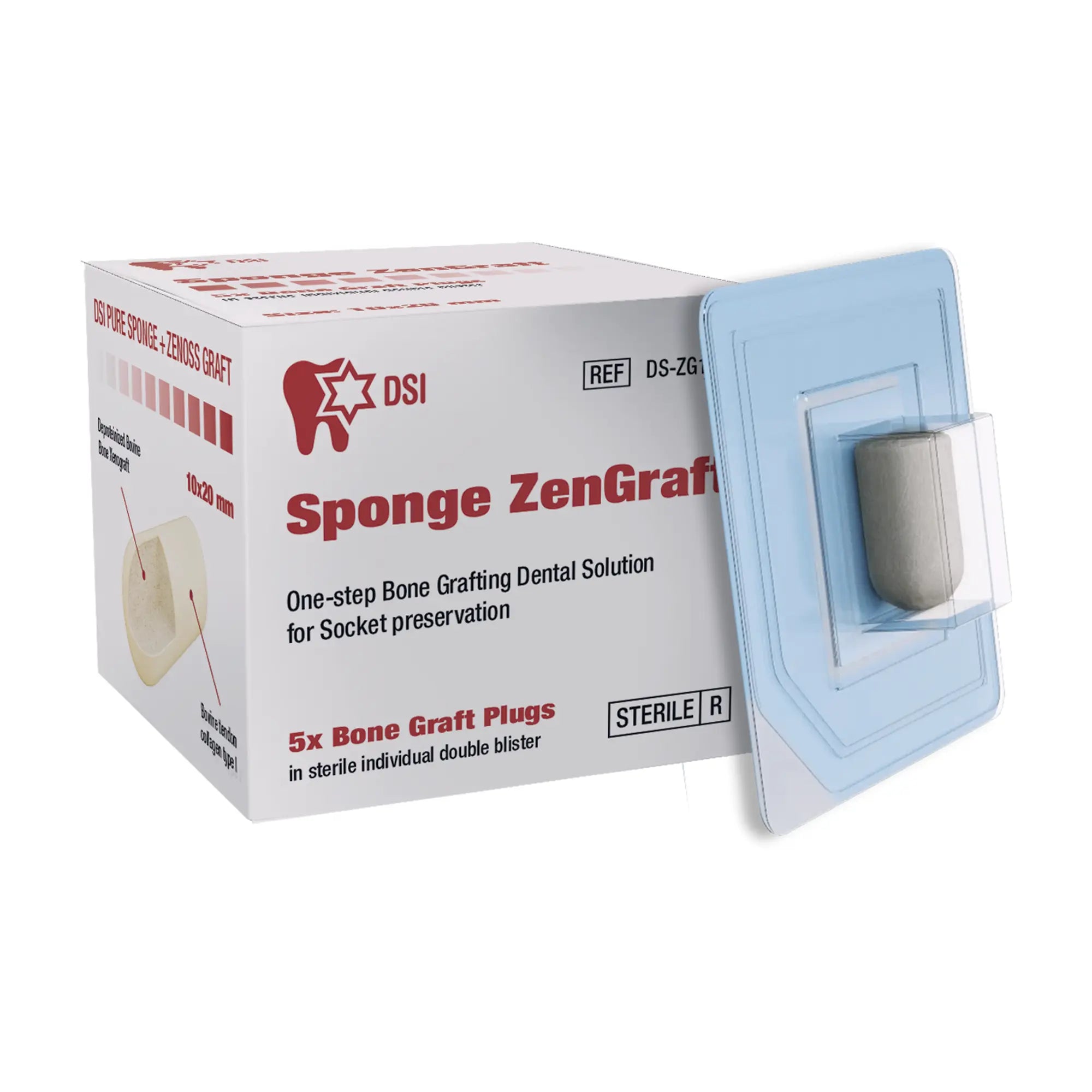
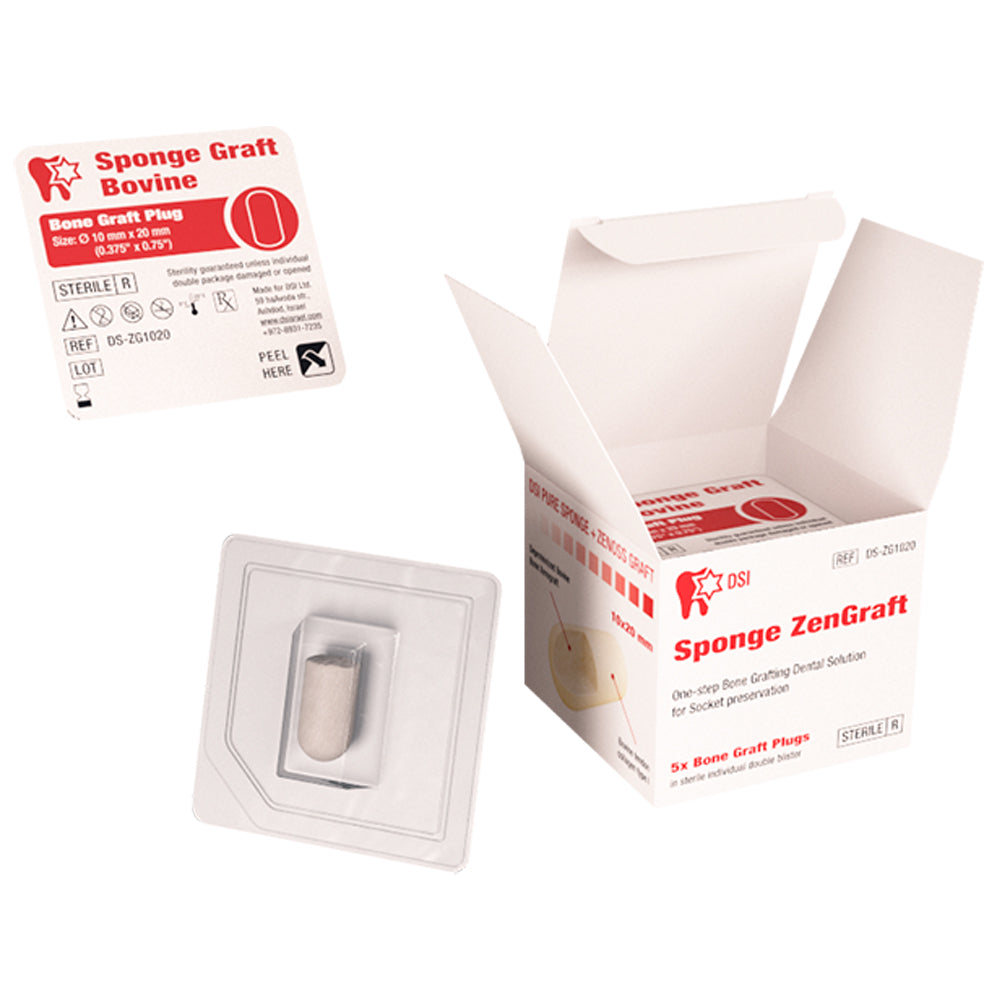
4. Collagen Sponges & Cubes: Hemostasis Meets Regeneration
Our line of collagen sponges (including impregnated options with bone graft) are great for immediate post-extraction needs:
- Provide clot stability and immediate hemostasis
- Maintain ridge contour during healing
- Combine collagen with granules for gradual bone regeneration
Because they’re resorbable and easy to use, they’re a top pick for quick chairside applications.
5. Barrier Membranes: Essential for Guided Bone Regeneration
Membranes are a key component for guided bone regeneration (GBR) procedures:
-
Barrier: Prevents soft tissue in-growth
-
Stabilization: Holds graft in place
-
Absorbable vs non-absorbable options suited to your timeline and technique
Our resorbable collagen membranes offer reliable performance without needing removal - ideal for single-surgery GBR.
Understanding Graft Sources & Biologic Action
An effective dental bone graft depends on both source and function:
-
Autografts (patient's own bone): osteogenic + osteoinductive + osteoconductive (gold standard)
-
Allografts (human donor): osteoconductive, with some growth factors retained
-
Xenografts (animal source): osteoconductive, stable volume retention
-
Alloplasts (synthetic): osteoconductive, resorption rates vary
dip dental™ carries all four categories so you can tailor treatment to the clinical need.
Why Your Choice Matters
The right bone graft:
-
Enables successful osseointegration
-
Shapes the ridge for aesthetic outcomes
-
Prevents bone collapse
-
Reduces need for future grafting
At dip dental™, we’re committed to offering solutions for every stage - from single extractions to sinus lifts, ridge builds, and full-arch cases.
How to Choose the Best Graft
Case type: extraction? ridge deficiency? sinus lift?
Volume needed: granules for small jobs, blocks for structural rebuilds
Healing timeline: gel for fast chairside healing; blocks/membranes for delayed implants
Patient factors: smoking or history of periodontal disease - choose materials with better stability
Budget: synthetic grafts are cost-effective; xenografts offer stable volume; allografts mimic natural bone
dip dental™: Supporting You From Surgery to Restoration
Here’s how we ensure you’re equipped for success:
-
Wide product range - granules, blocks, gels, sponges, membranes
-
Clinical-grade materials - bovine, porcine, synthetic, and human allograft
-
Accessories included - syringe gels, collagen plugs, and matching membranes
-
Bulk and sample options - so you can trial before stocking up
-
Fast shipping and friendly support - we answer your grafting questions and help with compatibility
Clinical Tips: Maximize Graft Success
- Stabilize the graft using membrane or flap closure
- Avoid exposure - protect grafted sites with collagen or sutures
- Control infection with aseptic technique, rinse, and post-op care
- Plan your implant timing (4-6 months for granules/blocks; 8-12 months for large reconstruction)
In Summary
A successful implant begins with a reliable dental bone graft strategy - and dip dental™ offers the depth and quality to support it. From granules to membranes, we’re your one-stop graft shop, delivering clinical reliability and practical convenience.
Ready to explore?
- Check out our complete grafting catalog: dipdental.com/collections/biomaterials
- Need help with case planning or sample sizing? Contact us today!