Las sobredentaduras retenidas por implantes pueden mejorar significativamente la estabilidad, retención y función de las prótesis removibles. Pero los implantes en sí mismos son solo parte de la solución restauradora. El sistema de aditamentos de sobredentadura crea la conexión entre los implantes y la prótesis removible, y elegir el aditamento correcto puede tener un gran impacto en la retención, el mantenimiento, el espacio restaurador y la usabilidad a largo plazo.
No existe un sistema de aditamentos único que sea ideal para todos los casos.
La conexión del implante, el tamaño de la plataforma, la altura del tejido, la angulación del implante, el espacio restaurador disponible, la retención deseada y el diseño protésico pueden influir en la elección.
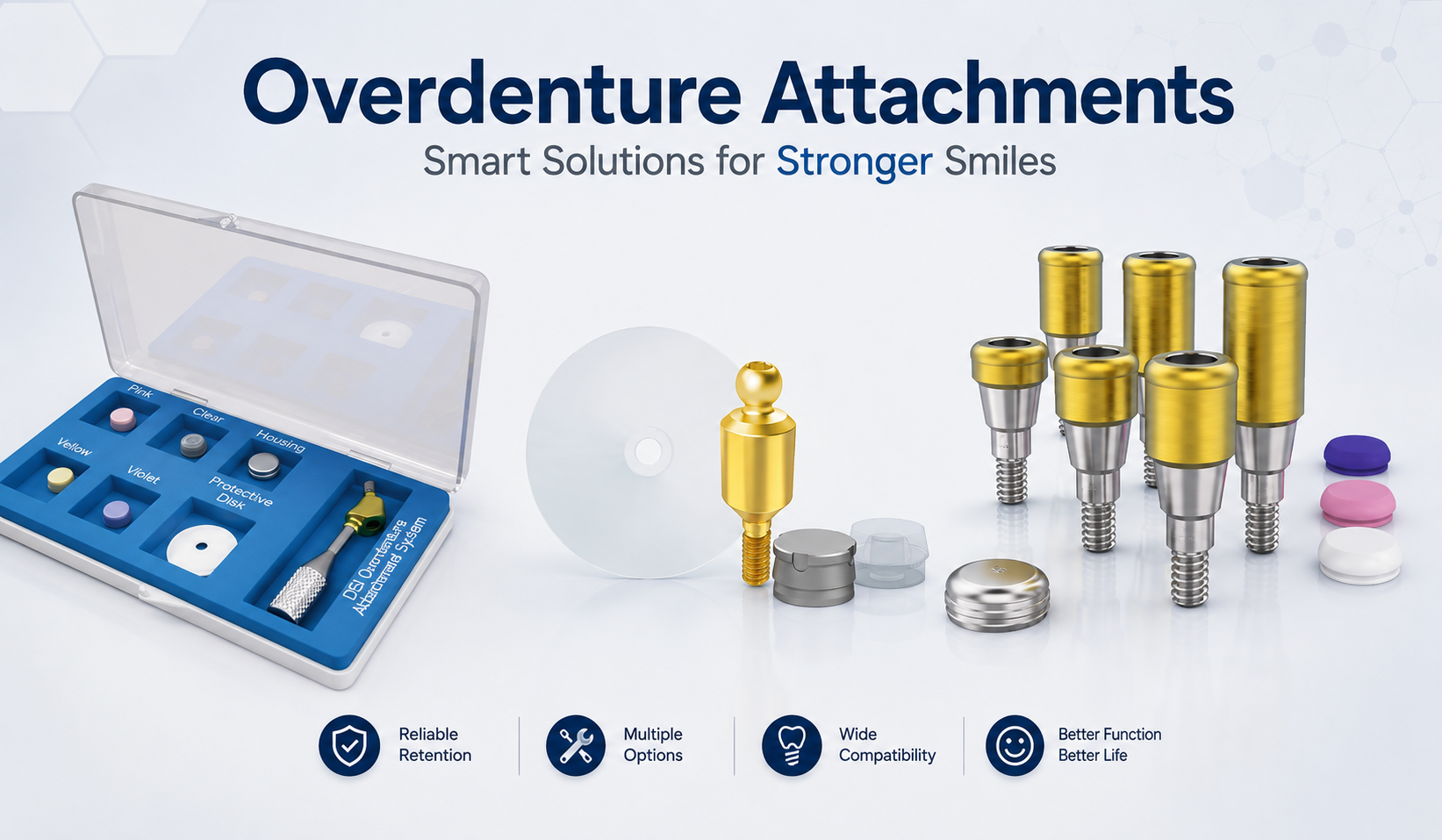
En dip dental™, ofrecemos una amplia selección de aditamentos de sobredentadura para implantes dentales, incluidas soluciones compatibles con Locator®, aditamentos de bola, aditamentos de perfil bajo, opciones rectas y anguladas, insertos de retención, cofias metálicas, cubetas de impresión, análogos de laboratorio y herramientas dedicadas.
Explore nuestra colección completa de aditamentos de sobredentadura para encontrar soluciones para una amplia variedad de sistemas de implantes y requisitos de restauración.
¿Qué son los aditamentos de sobredentadura para implantes dentales?
Un aditamento de sobredentadura es la conexión mecánica entre un implante dental y una sobredentadura removible.
A diferencia de una prótesis completa convencional que depende principalmente de los tejidos subyacentes para la retención, una sobredentadura retenida por implantes utiliza aditamentos conectados a los implantes.
Los componentes retentivos correspondientes se incorporan a la prótesis, lo que permite que esta se fije de forma segura a los implantes, pero que el paciente pueda retirarla para limpiarla y mantenerla.
Dependiendo del sistema de aditamentos, el conjunto puede incluir:
- Aditamento o pilar de implante
- Cofia metálica
- Inserto o capuchón retentivo
- Cubeta de impresión
- Análogo de laboratorio
- Herramientas de inserción o remoción
Este enfoque modular también hace que muchos sistemas de aditamentos sean relativamente fáciles de mantener porque los componentes retentivos desgastados a menudo pueden reemplazarse sin reemplazar todo el aditamento.
Principales tipos de aditamentos de sobredentadura
Los diferentes diseños de aditamentos ofrecen diferentes ventajas clínicas y restauradoras. La gama dip dental™ incluye varias opciones importantes.
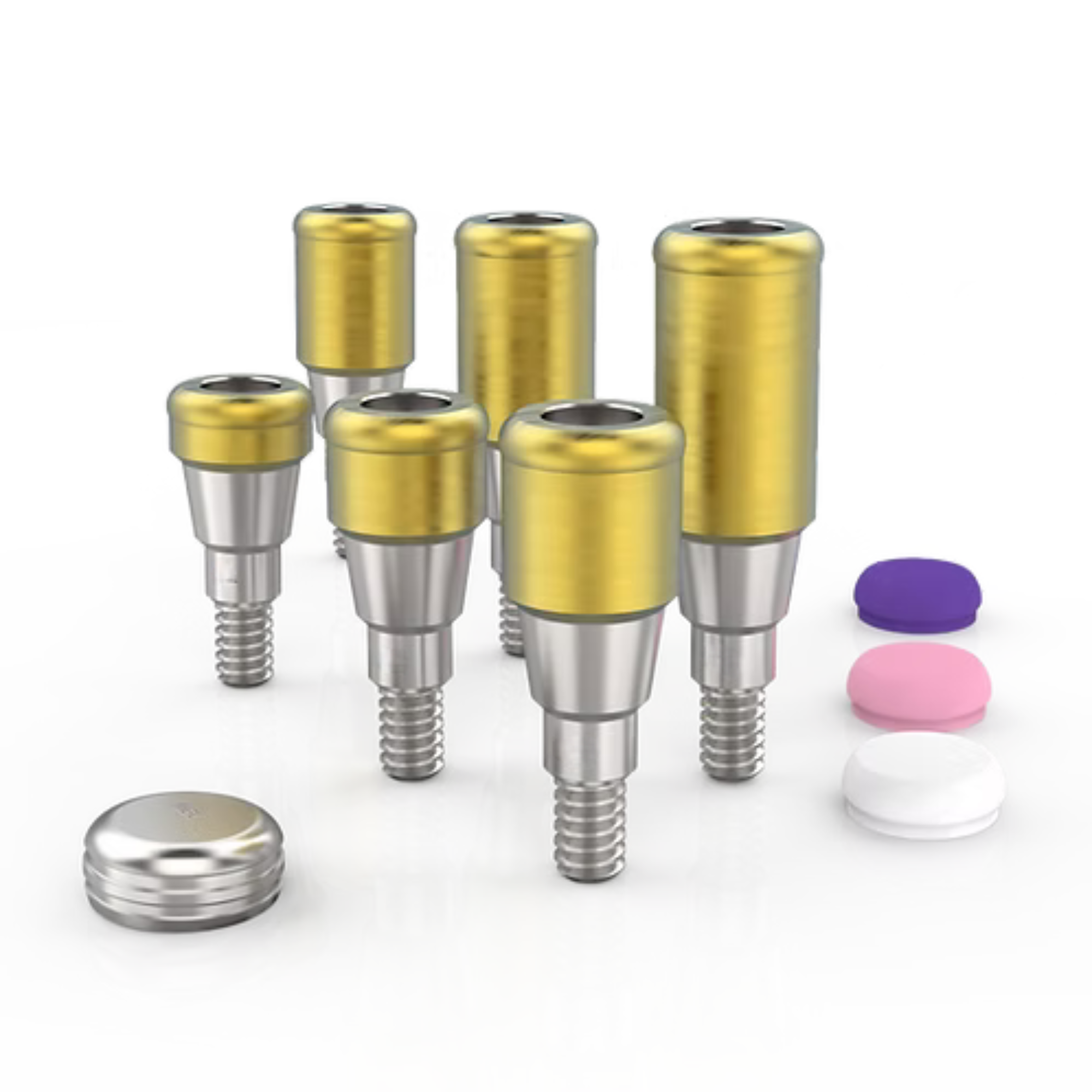
Aditamentos Locator® y compatibles con Locator
Los aditamentos tipo Locator se encuentran entre las soluciones más reconocidas para sobredentaduras retenidas por implantes.
Su popularidad se debe a la combinación de un perfil vertical bajo con insertos retentivos reemplazables, lo que los hace particularmente útiles cuando el espacio restaurador y el mantenimiento futuro son consideraciones importantes.
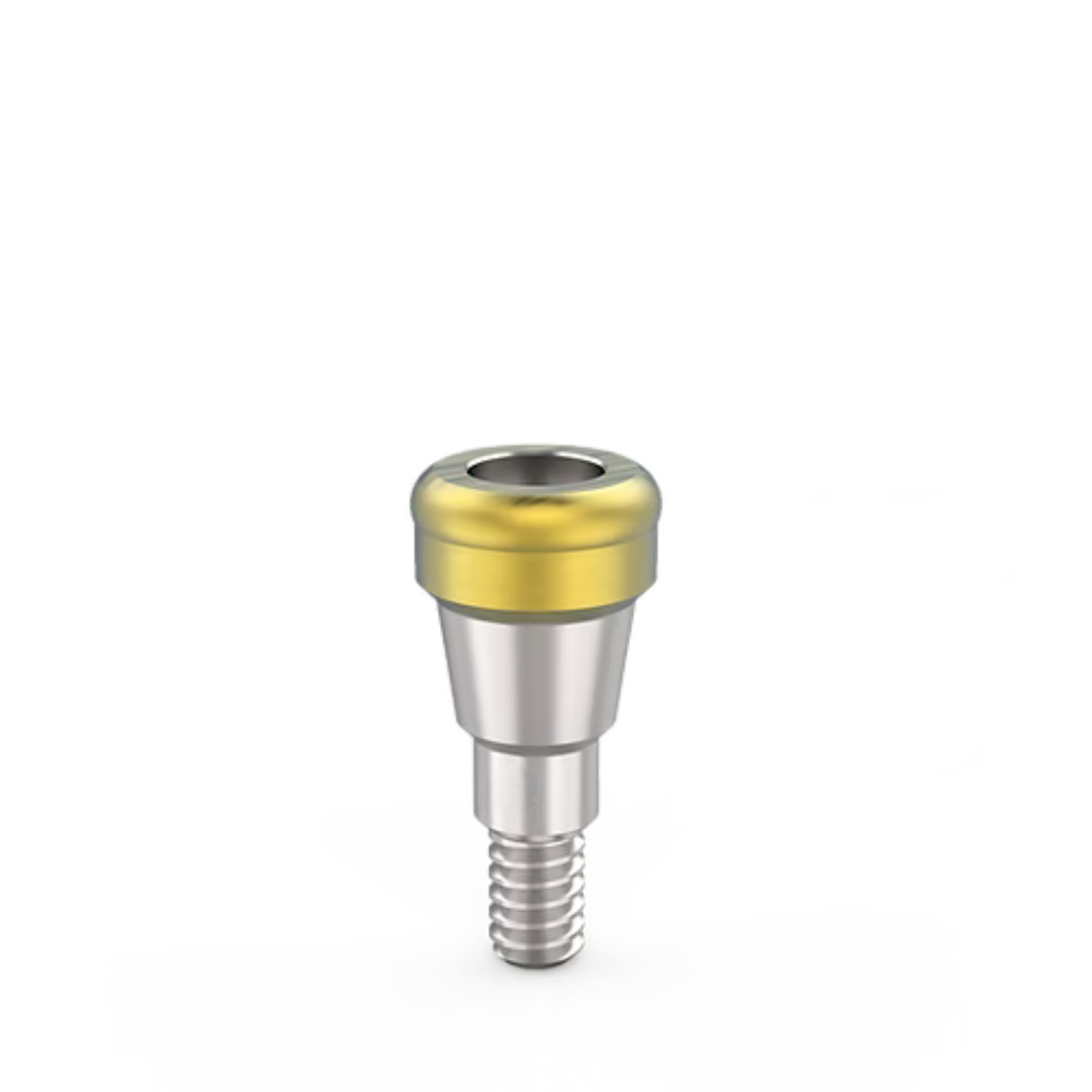
Un sistema típico tipo Locator consiste en un aditamento de implante, una cofia metálica dentro de la prótesis y un inserto de retención reemplazable.
A medida que el componente retentivo se desgasta con el tiempo, se puede reemplazar sin necesidad de reemplazar el aditamento del implante.
dip dental™ ofrece una gama dedicada de aditamentos y componentes compatibles con Zest Locator®, que incluyen aditamentos de implante, cofias, insertos de retención, componentes de impresión, análogos y herramientas dedicadas.
Explore nuestra colección completa compatible con Zest Locator® para conocer las opciones disponibles.
Aditamentos de bola
Los aditamentos de bola representan otro enfoque establecido para las sobredentaduras retenidas por implantes.
Un pilar en forma de bola se conecta al implante y se acopla a un componente retentivo correspondiente incorporado a la prótesis.
Una de las principales ventajas de los aditamentos de bola es su diseño mecánico relativamente sencillo.
Para los casos apropiados, pueden proporcionar una solución eficaz y económica para mejorar la retención de la prótesis manteniendo una restauración removible.
La gama dip dental™ incluye aditamentos de bola rectos y angulados, así como opciones para diferentes conexiones de implantes y tamaños de plataforma.
Aditamentos Loc-In de perfil bajo
Cuando el espacio restaurador vertical es limitado, un aditamento de perfil bajo puede ofrecer una solución atractiva.
Nuestra gama de aditamentos Loc-In incluye opciones rectas y anguladas para diferentes conexiones de implantes y tamaños de plataforma.
El perfil reducido puede ser particularmente útil cuando el espacio protésico disponible hace que un conjunto de aditamentos más grande sea menos deseable.
Como con cualquier componente de sobredentadura, la conexión, la plataforma, la altura y la configuración restauradora adecuadas deben confirmarse antes de la selección.
Aditamentos DIP-LOCK
DIP-LOCK ofrece otra opción de aditamento de perfil bajo dentro del catálogo de sobredentaduras de dip dental™.
Hay configuraciones rectas y anguladas disponibles, incluidas soluciones diseñadas para conexiones Internal Hex seleccionadas.
Esto ofrece a los clínicos y laboratorios dentales otra opción al equilibrar la posición del implante, el espacio restaurador, los requisitos de retención y el costo de los componentes.
En lugar de forzar cada caso en un único sistema de aditamentos, tener varios diseños de aditamentos disponibles permite seleccionar la solución restauradora según la situación clínica individual.
Aditamentos de sobredentadura compatibles para diferentes marcas de implantes
Una de las ventajas más importantes de la gama dip dental™ es la compatibilidad entre múltiples sistemas y conexiones de implantes.
Las clínicas y laboratorios dentales rara vez se encuentran con una sola marca de implantes. Un laboratorio puede recibir casos que involucran a varios fabricantes cada semana, mientras que los clínicos pueden necesitar restaurar implantes que se colocaron en otro lugar o hace años.
Por esta razón, dip dental™ ofrece soluciones de sobredentadura compatibles para una variedad de sistemas de implantes.
Según la familia de aditamentos y el producto individual, las opciones disponibles incluyen compatibilidad con sistemas como:
- Neodent®
- MegaGen AnyRidge®
- MegaGen Mini
- Zimmer®
- Conexiones de implantes Internal Hex
- Conexiones de implantes cónicos
- Plataformas estrechas y regulares
Nuestra colección dedicada compatible con Zest Locator®, por ejemplo, incluye soluciones de aditamentos compatibles para varios sistemas de implantes y múltiples alturas gingivales.
Esto proporciona a las clínicas y laboratorios la flexibilidad de obtener componentes de sobredentadura compatibles sin estar restringidos a un único fabricante de implantes.
La compatibilidad debe verificarse siempre
Que un aditamento se describa como "compatible con Locator" o "compatible con sobredentadura" no significa que encaje en todos los implantes.
Antes de realizar el pedido, verifique siempre:
Fabricante del implante → sistema del implante → conexión → plataforma → altura gingival → configuración del aditamento.
Esto es especialmente importante cuando se trabaja con implantes de diferentes fabricantes.
Dos aditamentos pueden parecer casi idénticos externamente, pero tienen interfaces de implante, roscas o geometrías de conexión completamente diferentes.
Aditamentos de sobredentadura rectos frente a angulados
Los implantes no siempre se colocan perfectamente paralelos entre sí.
Cuando la posición del implante y la trayectoria de inserción prevista son favorables, un aditamento recto puede proporcionar la solución restauradora más simple.
Cuando la divergencia del implante crea una situación protésica más desafiante, un aditamento de sobredentadura angulado puede ofrecer otra opción para gestionar la geometría restauradora.
dip dental™ ofrece configuraciones rectas y anguladas en varias familias de aditamentos, incluidos aditamentos de bola, Loc-In y soluciones DIP-LOCK.
Tener ambas opciones disponibles otorga al clínico y al laboratorio una mayor flexibilidad al planificar la restauración removible.
Cómo elegir la altura gingival correcta
La selección de la conexión del implante correcta es solo una parte de la elección de un aditamento de sobredentadura.
La altura gingival también es crítica.
El aditamento debe emerger adecuadamente a través del tejido blando circundante para que el mecanismo de retención pueda funcionar correctamente.
Por esta razón, muchos sistemas de aditamentos están disponibles con varias alturas de collar o gingivales.
Por ejemplo, dentro de nuestra gama compatible con Zest Locator®, los sistemas de implantes seleccionados están disponibles con múltiples opciones de altura gingival para adaptarse a diferentes condiciones tisulares.
Al pedir un aditamento, por lo tanto, no se limite a identificar el sistema de implantes.
Mida y confirme también la altura de tejido requerida.
Insertos de retención, capuchones y cofias metálicas
Uno de los aspectos más prácticos de muchos sistemas de aditamentos de perfil bajo es su mecanismo de retención modular.
Una cofia metálica se incorpora a la prótesis y contiene un inserto o capuchón retentivo reemplazable. Este componente se acopla al aditamento del implante y determina la retención de la prótesis.
Con el tiempo, la inserción y remoción normal de la prótesis pueden causar el desgaste del componente retentivo.
En lugar de reemplazar todo el conjunto del aditamento, el clínico generalmente puede reemplazar el inserto desgastado.
dip dental™ ofrece componentes de retención de reemplazo, cofias metálicas y herramientas dedicadas de inserción/extracción para sistemas de sobredentadura compatibles.
Para los clínicos, esto puede simplificar el mantenimiento rutinario.
Para los laboratorios, significa tener acceso no solo al aditamento en sí, sino también a los componentes de soporte necesarios durante toda la vida útil de la restauración.
Cubetas de impresión y análogos de laboratorio
Un flujo de trabajo de sobredentadura no termina con la elección de un aditamento.
La transferencia precisa de la posición del implante o del aditamento también es esencial durante la fabricación de la prótesis.
Dependiendo del sistema seleccionado, los componentes de soporte pueden incluir:
Cubetas de impresión para comunicar la posición del aditamento durante los procedimientos de impresión.
Análogos de laboratorio para reproducir la posición del aditamento o implante en el modelo de trabajo.
Cofias metálicas e insertos de retención para incorporar a la prótesis final.
Herramientas dedicadas para inserción, remoción y mantenimiento.
Por eso, comprar un aditamento como parte de un ecosistema de componentes compatibles más amplio puede ser más práctico que adquirir un pilar aislado.
Aditamentos de sobredentadura originales frente a compatibles
Los componentes originales del fabricante siguen siendo una solución adecuada para muchos casos restauradores.
Sin embargo, los aditamentos de sobredentadura compatibles de alta calidad pueden proporcionar a las clínicas y laboratorios una flexibilidad adicional en el suministro.
Las posibles ventajas incluyen:
- Precios más competitivos de los componentes
- Acceso a múltiples sistemas de implantes de un solo proveedor
- Múltiples opciones de altura gingival
- Configuraciones rectas y anguladas
- Insertos y cofias de repuesto
- Componentes de laboratorio y de impresión
- Gestión de inventario más sencilla para laboratorios multisistema
- Oportunidades de compra por volumen
La compatibilidad, la calidad de fabricación y la correcta selección de los componentes siempre deben tener prioridad sobre el precio por sí solo.
El objetivo no es simplemente encontrar el aditamento más barato. Es identificar la solución restauradora adecuada para el sistema de implante específico y la situación clínica.
Cómo elegir el aditamento de sobredentadura adecuado
Antes de seleccionar un aditamento de sobredentadura, considere la situación restauradora completa.
Comience identificando el fabricante exacto del implante y el sistema de implantes. A continuación, verifique las dimensiones de la conexión y la plataforma.
Luego considere el espacio restaurador vertical disponible, la altura del tejido, la angulación del implante, la retención deseada y los requisitos de mantenimiento del paciente.
Para clínicas y laboratorios que trabajan con muchos sistemas de implantes, la disponibilidad de componentes es otra consideración importante. Un buen sistema de aditamentos debería idealmente proporcionar no solo el aditamento del implante en sí, sino también los componentes de reemplazo necesarios posteriormente.
En términos prácticos, haga estas preguntas antes de realizar el pedido:
- ¿Qué sistema de implantes estoy restaurando?
- ¿Cuál es la conexión y plataforma exacta del implante?
- ¿Qué altura gingival se requiere?
- ¿Necesito un aditamento recto o angulado?
- ¿Cuánto espacio restaurador está disponible?
- ¿Qué nivel de retención es apropiado?
- ¿Los insertos y cofias de repuesto están fácilmente disponibles?
- ¿Están disponibles los componentes de impresión y de laboratorio requeridos?
Responder a estas preguntas antes de realizar el pedido puede ayudar a prevenir problemas de compatibilidad y retrasos restauradores innecesarios.
Una fuente completa de aditamentos de sobredentadura para implantes dentales
El aditamento de sobredentadura adecuado depende del implante, la prótesis y la situación clínica individual.
Algunos casos pueden beneficiarse de un aditamento de bola sencillo. Otros pueden requerir una solución Loc-In o compatible con Locator de perfil bajo. La divergencia del implante puede hacer que un aditamento angulado sea preferible, mientras que las diferentes alturas de tejido requieren alturas de aditamento correspondientes.
En dip dental™, el objetivo es proporcionar opciones, compatibilidad y acceso al flujo de trabajo restaurador completo.
Nuestra colección de aditamentos de sobredentadura incluye aditamentos de bola, aditamentos de perfil bajo, soluciones Loc-In y DIP-LOCK, opciones rectas y anguladas, componentes de retención, cofias, cubetas de impresión, análogos y herramientas.
Para soluciones tipo Locator, explore nuestra colección dedicada compatible con Zest Locator®, con opciones de aditamentos compatibles con varios sistemas de implantes líderes.
Ya sea usted una clínica dental, un dentista restaurador, un especialista en implantes o un laboratorio dental que trabaja con múltiples marcas de implantes, dip dental™ le proporciona acceso a una creciente gama de soluciones de sobredentadura compatibles en un solo lugar.
Un mercado. Miles de soluciones dentales.
Preguntas frecuentes sobre aditamentos de sobredentadura para implantes dentales
¿Cuáles son los principales tipos de aditamentos de sobredentadura?
Las opciones comunes de aditamentos de implante individuales incluyen aditamentos de perfil bajo tipo Locator, aditamentos de bola y otros sistemas de perfil bajo como Loc-In y DIP-LOCK. La solución adecuada depende del sistema de implantes, el espacio restaurador disponible, la altura del tejido, la posición del implante y los requisitos de retención.
¿Los aditamentos de sobredentadura son compatibles con diferentes marcas de implantes?
Sí. Existen aditamentos de sobredentadura compatibles para varios sistemas y conexiones de implantes. La gama dip dental™ incluye opciones para sistemas como Neodent®, MegaGen AnyRidge®, MegaGen Mini, Zimmer® y varias conexiones internas hexagonales y cónicas. La disponibilidad depende del producto individual.
¿Los aditamentos compatibles con Locator son universales?
No. Los aditamentos compatibles con Locator aún deben coincidir con el sistema de implante exacto, la conexión, la plataforma y la altura gingival requerida.
¿Cuál es la diferencia entre un aditamento de bola y un aditamento tipo Locator?
Los aditamentos de bola utilizan un pilar de implante en forma de bola y un componente retentivo correspondiente. Los sistemas tipo Locator utilizan un aditamento de perfil bajo con una cofia y un inserto retentivo reemplazable. Cada diseño tiene diferentes características restaurativas y debe seleccionarse de acuerdo con el caso individual.
¿Por qué los aditamentos de sobredentadura están disponibles en diferentes alturas gingivales?
El grosor del tejido blando varía entre pacientes y sitios de implantes. Las diferentes alturas gingivales permiten que el aditamento emerja adecuadamente por encima del tejido circundante.
¿Se puede ajustar o renovar la retención de una sobredentadura?
Con muchos sistemas de perfil bajo, la retención es proporcionada por un inserto o capuchón reemplazable dentro de la cofia de la prótesis. Cuando el componente se desgasta, generalmente se puede reemplazar sin reemplazar todo el aditamento del implante.
¿Ofrecen aditamentos de sobredentadura angulados?
Sí. La colección dip dental™ incluye opciones rectas y anguladas dentro de varias familias de aditamentos, lo que proporciona flexibilidad adicional cuando es necesario abordar la posición o divergencia del implante.
¿Qué debo verificar antes de pedir un aditamento de sobredentadura?
Confirme la marca y el sistema del implante, la conexión, el tamaño de la plataforma, la altura gingival, el tipo de aditamento, la angulación y los componentes restauradores necesarios. Si la identificación del implante es incierta, verifíquela antes de realizar el pedido.