Dental implants demonstrate high survival rates, yet one biological complication continues to threaten long-term success: peri-implantitis.
As implant placement increases globally, so does the incidence of inflammatory peri-implant disease. Unlike mechanical complications such as screw loosening or component fracture, peri-implantitis is a progressive biological condition that can silently compromise osseointegration and ultimately lead to implant loss.
Understanding its pathogenesis, daily preventive measures, and appropriate treatment tools is essential for every implant clinician.
What Is Peri-Implantitis?
Peri-implantitis is a chronic inflammatory process affecting the soft and hard tissues surrounding an osseointegrated implant. It is characterized by:
-
Bleeding on probing
-
Suppuration
-
Increased probing depth
-
Progressive marginal bone loss
-
Radiographic defects around the implant
Unlike peri-implant mucositis, which involves soft tissue inflammation only and is reversible, peri-implantitis includes irreversible bone destruction.
Once bone loss begins, intervention becomes significantly more complex.
“Peri-implantitis is a plaque-associated pathological condition occurring in tissues around dental implants, characterized by inflammation in the peri-implant mucosa and progressive loss of supporting bone.”
— Derks & Tomasi, Journal of Clinical Periodontology
Why Peri-Implantitis Is a Major Clinical Threat
1. Silent Progression
Many patients remain asymptomatic during early stages. Bone loss may advance before discomfort appears.
2. Implant Surface Complexity
Rough implant surfaces designed to enhance osseointegration also create micro-retentive niches for biofilm accumulation.
3. Micro-Gap Bacterial Reservoir
The implant–abutment interface allows bacterial penetration into the internal chamber, sustaining chronic inflammation.
4. Mechanical Instability
Ill-fitting prosthetics, screw loosening, damaged threads, or incompatible components can increase micro-movement and promote bacterial infiltration.
Peri-implantitis is not purely a hygiene issue — it is the interaction between biological contamination and mechanical instability.
Daily Prevention Protocol for Implant Dentists
Long-term implant success depends on structured maintenance and early intervention.
Structured Recall Program
-
3–6 month maintenance intervals
-
Baseline radiographs for comparison
-
Controlled probing force (≤0.25 N)
-
Bleeding and plaque index documentation
Professional Biofilm Control
Implant surfaces require specialized instrumentation.
Standard stainless steel curettes may scratch titanium and increase plaque retention.
Only implant-safe debridement tools should be used.
Implant Surface Debridement – The Importance of Specialized Cleaning Brushes
Effective peri-implantitis management begins with thorough decontamination of the implant surface.
Traditional instruments often fail to adequately clean rough implant threads while preserving surface integrity.
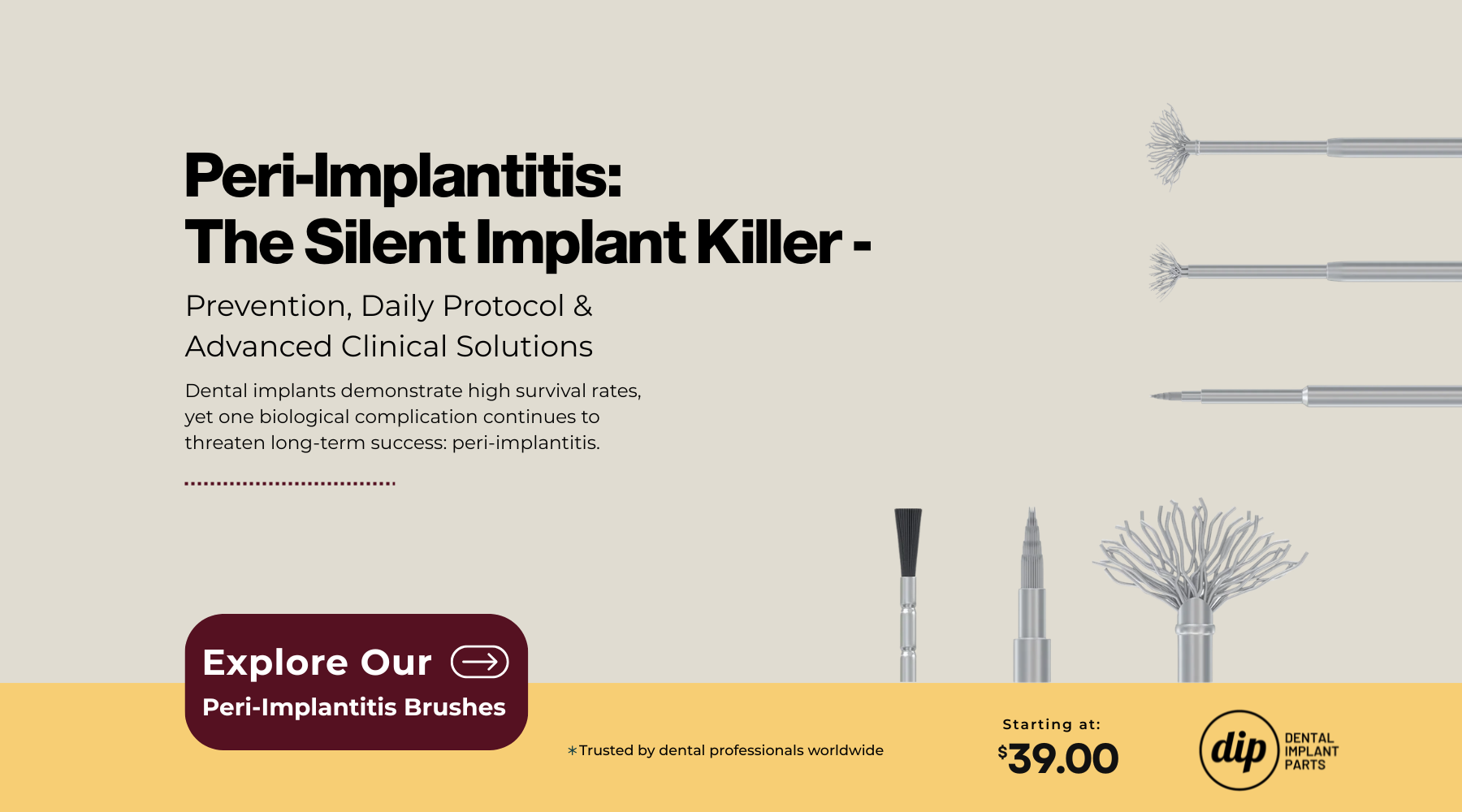
DIP Peri-Implantitis Cleaning Brush
The DIP Peri-Implantitis Cleaning Brush is engineered specifically for implant surface debridement.
It is designed to:
-
Adapt to implant thread geometry
-
Disrupt biofilm on roughened titanium surfaces
-
Access difficult thread undercuts
-
Minimize surface scratching
-
Preserve the implant’s structural integrity
Surface preservation is critical.
Excessive surface alteration may impair potential re-osseointegration and increase future plaque retention.
Controlled mechanical brushing provides a balance between effective decontamination and implant protection.
Managing the Implant–Abutment Micro-Gap
Even after surface debridement, the internal implant chamber remains a potential bacterial reservoir.
The micro-gap between implant and abutment is a well-documented source of bacterial colonization.
Two strategies can reduce this risk.
Antibacterial Sealing – Viruseal
Viruseal Anti-Bacterial Implant Sealing Gel is formulated to reduce microbial colonization within the internal implant cavity.
Its purpose is to:
-
Minimize micro-leakage
-
Reduce bacterial penetration
-
Support peri-implant tissue stability
-
Decrease reinfection risk during maintenance
By sealing the internal chamber, antibacterial gel addresses one of the most overlooked etiological contributors to peri-implantitis.
Mechanical Sealing – SilverPlug
SilverPlug Sealing Implant Systems provide a mechanical barrier inside the implant connection.
Key advantages include:
-
Physical sealing of the internal chamber
-
Antimicrobial silver properties
-
Reduced bacterial migration
-
Simple integration into restorative workflows
Combining antibacterial gel with mechanical sealing offers layered protection against reinfection.
Early Intervention Strategy for Peri-Implantitis
When clinical signs appear — increased probing depth, bleeding, radiographic bone defects — immediate action is required.
A comprehensive peri-implantitis treatment protocol may include:
-
Mechanical biofilm removal using implant-safe brushes
-
Surface detoxification
-
Internal antibacterial sealing
-
Mechanical sealing of the implant chamber
-
Regenerative procedures in advanced bone loss cases
The earlier the intervention, the more predictable the outcome.
Risk Factors That Increase Peri-Implantitis Incidence
Clinicians should evaluate patients for:
-
Poor oral hygiene
-
Smoking
-
History of periodontitis
-
Residual cement
-
Prosthetic misfit
-
Screw loosening
-
Damaged implant threads
-
Component incompatibility
Mechanical complications often precede biological failure.
Ensuring prosthetic precision is as important as plaque control.
A Structured Three-Layer Defense Against Peri-Implantitis
An effective peri-implant health strategy includes:
Layer 1 – Surface Decontamination
Use implant-specific cleaning brushes for safe biofilm disruption.
Layer 2 – Internal Antibacterial Protection
Apply antibacterial sealing gel within the implant chamber.
Layer 3 – Mechanical Micro-Gap Sealing
Use implant sealing plugs to prevent bacterial migration.
This layered approach enhances implant longevity and reduces recurrence risk.
Final Clinical Perspective
Peri-implantitis is a predictable risk in implant dentistry.
Its management requires:
-
Early detection
-
Precise mechanical debridement
-
Micro-gap control
-
Ongoing maintenance
-
Use of specialized peri-implant instruments
Implant success does not end at placement.
It depends on long-term biological stability and mechanical precision.
Clinics that implement structured prevention protocols and use dedicated peri-implant tools significantly improve long-term implant survival.
Frequently Asked Questions About Peri-Implantitis
What is peri-implantitis?
Peri-implantitis is a plaque-associated inflammatory disease around dental implants that leads to progressive loss of supporting bone and may result in implant failure if untreated.
What is the difference between peri-implant mucositis and peri-implantitis?
Peri-implant mucositis is reversible inflammation limited to the soft tissues. Peri-implantitis includes inflammation combined with progressive bone loss.
What are the main signs of peri-implantitis?
Common signs include bleeding on probing, suppuration, increased probing depth compared to baseline, and radiographic bone loss. In advanced cases, implant mobility may occur.
What causes peri-implantitis?
The primary cause is bacterial biofilm. Contributing factors include poor plaque control, smoking, previous periodontitis, residual cement, prosthetic misfit, screw loosening, and micro-gap bacterial infiltration.
How can dentists help prevent peri-implantitis?
Prevention includes structured recall visits every 3–6 months, baseline radiographs, controlled probing, implant-safe debridement, occlusal evaluation, and strong patient hygiene education.
What tools are recommended for implant surface cleaning?
Specialized peri-implant cleaning brushes and implant-safe debridement instruments are recommended to remove biofilm from rough implant surfaces while preserving titanium integrity.
Does sealing the implant micro-gap help?
Yes. Sealing the internal implant chamber with antibacterial gel or mechanical sealing plugs can reduce bacterial micro-leakage and lower reinfection risk.
Can peri-implantitis be treated successfully?
Early stages can often be controlled with professional cleaning and maintenance. Advanced cases may require surgical access, implant surface detoxification, and regenerative procedures.